

From Apprentices to Leaders: How Hands-On Learning Built Two Construction Careers

As the construction industry evolves to meet growing demand, apprenticeships remain a proven pathway for developing skilled professionals and future leaders.
Construction is an industry shaped by experience. While technology, sustainability and modern methods are changing how the built environment takes shape, one thing remains constant: the value of learning on site, developing skills through real projects, and understanding how teams operate in practice.
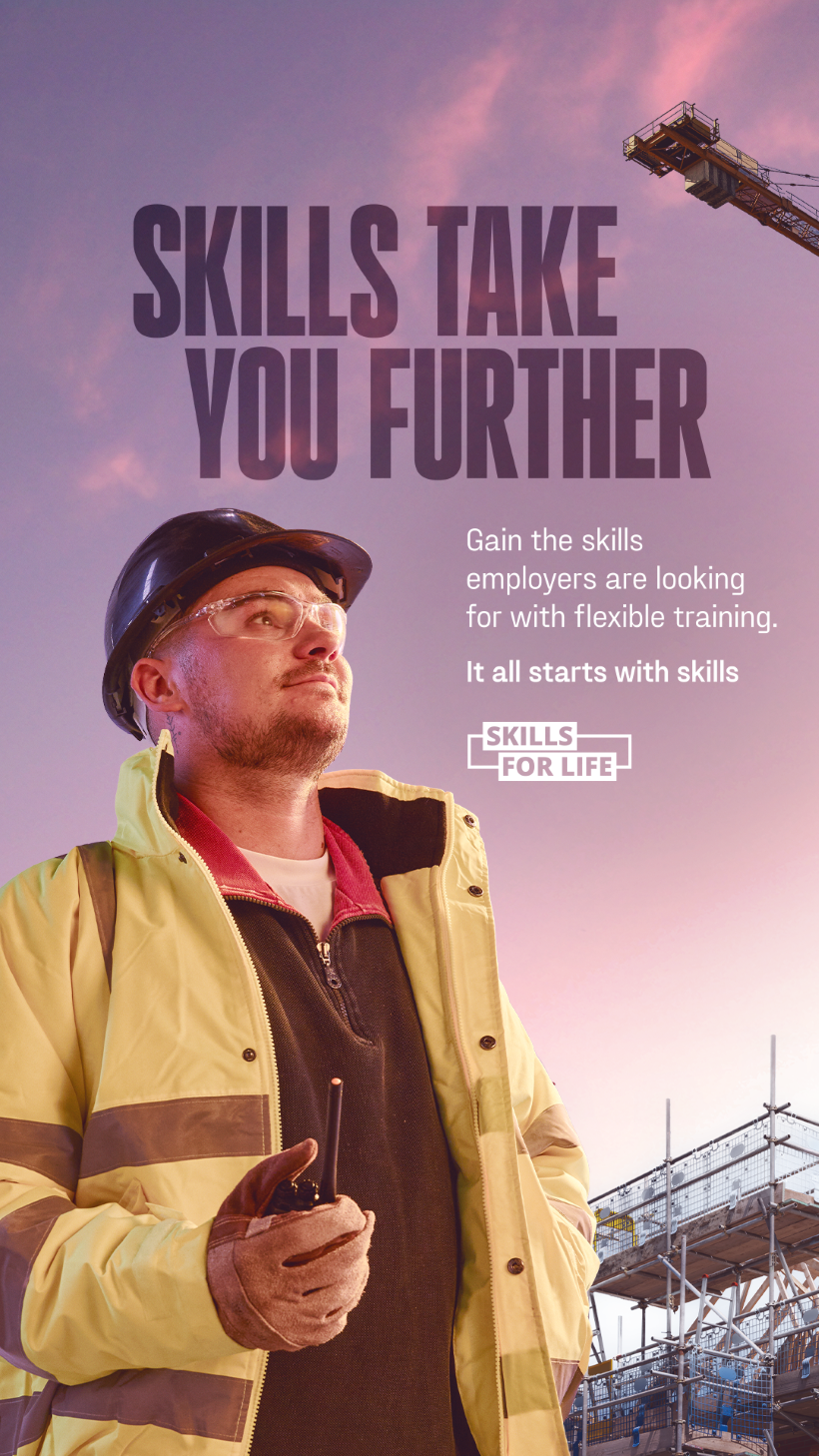
For Claire Brittain and Bailey Long, an apprenticeship was not just a first step into the sector, it was the foundation on which long, successful careers have been built. Today, both are established professionals working at senior levels, and both are committed to supporting those just starting out, helping to secure a strong pipeline of talent for the future of construction. Both have since been recognised through their participation in the UK Government’s Skills for Life campaign, highlighting the long-term impact of technical and vocational learning.
Finding a route into construction
Claire Brittain’s path into construction began at the age of 15, sparked by watching an extension being built at her parents’ home. Seeing a building come together, piece by piece, captured her imagination and set her sights on a practical career.
At 17, she began a bricklaying apprenticeship with Taylor Wimpey.
“I absolutely threw myself into it,” Claire recalls. “I enjoyed the hands-on work and being part of something tangible.”
Entering a traditionally male-dominated industry brought its challenges, and she admits not everyone took her seriously at first, something that only strengthened her determination to succeed.
Bailey Long’s decision to take an apprenticeship was rooted closer to home. Growing up in Staffordshire, he was exposed to the trade early on through his father who was a bricklayer. Leaving school, he knew he wanted to learn a skill that would lead directly to work. Choosing a brickwork apprenticeship allowed him to do exactly that, combining earning with hands-on experience from day one.
“I enjoyed my apprenticeship and learned skills I still use years later,” Bailey says.
Alongside brickwork, he was exposed to carpentry, groundworks and dry lining. This breadth of experience would later help him progress into supervisory and management roles.
Learning resilience, not just skills
For both Claire and Bailey, the value of their apprenticeships went far beyond technical ability. While learning their trade on live sites, they developed professionalism, resilience and confidence, qualities that continue to define their careers.
Claire completed her apprenticeship in 2009, finishing just one week before giving birth to her eldest daughter. She continued working on site until the end of her pregnancy, making tailored adjustments with support from her employer and midwife.
“It demanded more resilience than I’d anticipated,” she says, “but it confirmed I’d chosen the right path.”
That resilience carried her forward as she balanced work with further study, completing a BTEC in Construction and the Built Environment followed by an HNC, and a BSc (Hons) in Construction Management, eventually progressing into site management roles. Today, Claire is a Senior Site Manager at BAM, overseeing subcontractors, managing risk assessments and quality checks, and working on major projects across the Midlands.
Bailey’s progression followed a different but equally instructive route. After completing his apprenticeship in 2018, he moved straight into major site work as a self-employed bricklayer at just 18. From there, he steadily worked his way up, first becoming a working foreman, then a project manager, and now a contracts manager for a brickwork company.
“My apprenticeship taught me teamwork, punctuality and how to operate on site. Those basics are what make progression possible,” he explains.
Progression that stays rooted on site
 Although their careers have advanced, both Claire and Bailey have remained closely connected to the practical realities of construction, a perspective they now pass on to others.
Claire has worked in the industry for more than 17 years, progressing from trainee site management to senior leadership. In 2017, she won the Women in Construction “Rising Star” award, recognising both her technical expertise and her impact within the sector.
A key part of her role today is mentoring and supporting others coming through similar routes. Having experienced the pressures of site life first-hand, she is well placed to guide apprentices and trainees through challenges, helping them build confidence and navigate long-term career paths.
Bailey, too, recognises the responsibility that comes with seniority. Now managing contracts and teams, he works closely with apprentices and younger workers entering brickwork and site operations.
“You can see the difference it makes when people are given the chance to learn properly,” he says. “Apprentices bring energy and commitment, and it’s important we invest time in them.”
Both believe that early exposure to real projects is key. Not only to developing skills, but to helping individuals understand where their careers can lead.
Featuring in a national campaign Both Claire and Bailey have also featured in the UK Government’s Skills for Life campaign, a campaign designed to raise awareness of the technical and vocational routes available into careers in construction, and more widely, in sectors including engineering, digital, health and green. The campaign aims to help people of all ages understand the breadth of training options open to them, from apprenticeships and T Levels to higher technical qualifications, and how these routes can lead to long-term, sustainable careers.
By showcasing real-life success stories from learners and employers across the country, Skills for Life highlights how practical, work-based learning is helping to address skills shortages while giving individuals the opportunity to progress, retrain or step into new roles. Claire and Bailey’s stories were selected as examples of how apprenticeships can provide not just an entry point into construction, but a platform for continued growth, leadership and long-term contribution to the sector.
Securing the future workforce
As construction faces growing demand for skilled labour, stories like Claire’s and Bailey’s underline the importance of apprenticeships as a long-term workforce strategy. Their journeys show how vocational routes can produce not just skilled tradespeople, but future managers, leaders and mentors.
For Claire, the appeal of construction has always been about seeing progress and being part of something real. For Bailey, it’s the opportunity to work his way up through merit, experience and commitment. What unites them is the belief that apprenticeships remain one of the most effective ways to build both individual careers and the industry’s future.
“An apprenticeship gives you a foot on the ladder,” Bailey says. “What you do with it is up to you.”
Today, as both help guide the next generation, their careers stand as proof that learning on the job unlocks potential. And in doing so, Claire and Bailey aren’t just reflecting on where they started; they’re actively shaping where construction goes next.
For more information about apprenticeships and technical training for employers and individuals, of all ages, visit the Skills for Careers website.