

What the Reformed Class Q Rules Mean for Firms Delivering Conversion Work
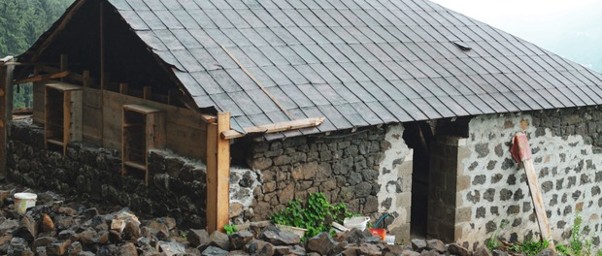
Agricultural conversion has quietly become one of the more active corners of rural residential delivery. The reformed Class Q permitted development right has been in force since May 2024, the transitional window for applications under the old rules closed in May 2025, and every prior approval submitted now runs under the current provisions. For contractors and developers working on rural sites, the practical question has moved on from what the reforms changed to what they mean once a scheme reaches site.
What the current rules allow
The headline numbers are more generous than they were. A single agricultural unit can now yield up to ten dwellings with a cumulative floor area of 1,000 square metres, although no individual dwelling may exceed 150 square metres. That has pushed many schemes away from one large house towards several smaller units, which changes the delivery profile considerably.
Rural residential work of this kind carries its own constraints, as recent schemes on sensitive green belt sites have shown, where ecology, access and ground conditions shape the approach as much as the design does.
Single storey rear extensions are permitted too, up to four metres beyond the rear wall, provided they sit on hardstanding that was in place before 24 July 2023.
Conversion, not reconstruction
This is where schemes most often come unstuck. The current Class Q provisions permit building operations only to the extent reasonably necessary for the building to function as a dwelling, covering the installation or replacement of windows, doors, roofs, exterior walls and services, plus partial demolition where those works require it.
External dimensions cannot extend beyond the existing building at any point, other than the permitted rear extension and protrusions of up to 0.2 metres. In practice, that puts real weight on the structural assessment. A frame that cannot take the works without substantial rebuilding is not a Class Q candidate, however appealing the site looks on paper.
Getting that judgement wrong is expensive, and it is a reminder that decisions taken at specification stage determine costs that surface much later. Prior approval now covers the provision of adequate natural light in all habitable rooms, alongside highways, noise, contamination, flooding, design and external appearance.
The exclusions that catch people out
Class Q does not apply everywhere, and the gaps matter. Development is not permitted on article 2(3) land, which takes in National Parks, Areas of Outstanding Natural Beauty, conservation areas and World Heritage Sites. Listed buildings are excluded outright, as are scheduled monuments and sites of special scientific interest.
That removes a substantial share of England’s older rural building stock from the permitted development route altogether. Those schemes take the full planning route instead, and delivery falls to firms equipped for traditional fabric and conservation-led work. Companies that specialise in heritage renovation work with that judgement as a matter of course.
Barn conversions and listed building renovations carried out under full planning consent call for the same fabric-first structural assessment that a Class Q application is built around, the difference being that there is no permitted development route to shortcut it.
Where a building is listed, the consent route for protected buildings applies instead, with its own application process, a 21 day consultation period and no fee.
What it means on site
Class Q work must be completed within three years of the prior approval date, the building needs suitable existing access to a public highway, and the finished dwellings must meet nationally described space standards. None of those is onerous on its own. Taken together, they reward an early and honest assessment of whether a structure can genuinely carry the scheme. For sites that qualify, that discipline is what keeps a Class Q programme on track. For the ones that do not, because the building is listed or the site sits on protected land, the same discipline still applies, just under a different consent route.