

BSE Home: Integrating Solar PV into Building Designs to Future-Proof Housing
This content is a sponsored publication provided by BSE Home, trusted specialists in heating, renewables and home energy efficiency across Sussex.
The UK construction industry stands at a defining moment. The Future Homes Standard requires new homes to produce lower carbon emissions, and the government’s net-zero 2050 target demands rapid transformation. Traditional energy efficiency measures, such as thicker insulation, triple glazing, and bolt-on solar panels, are no longer enough.
At BSE Home, we believe a fundamental shift is necessary, with the currently more niche specification of Building-Integrated Photovoltaics (BIPV) needing to be elevated to industry standard.
BIPV explained
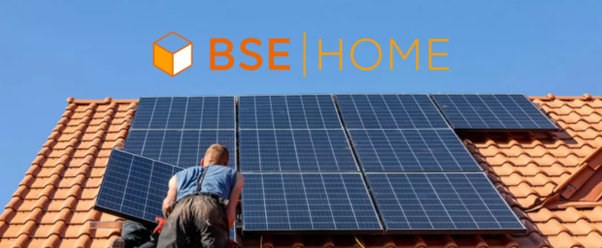
BIPV delivers a holistic solution that merges energy generation, building performance, and design integrity. Unlike conventional photovoltaic panels fixed onto completed roofs, BIPV products replace traditional materials entirely, forming the weatherproof envelope and active energy system in one. This redefines the “fabric first” philosophy: where we once focused on passive performance, BIPV adds active generation, creating buildings that produce energy as well as conserve it.
The technical and compliance advantage
The Future Homes Standard marks one of the biggest regulatory shifts, but its targets can’t be met through incremental improvements. They require integrated design combining ultra-efficient envelopes with on-site renewable generation, and BIPV achieves this dual goal.
As it is designed from the outset as part of the building envelope, BIPV can be thermally optimised to maintain airtightness and reduce the risk of roof overheating. This seamless integration simplifies Standard Assessment Procedure (SAP) calculations, aligning energy generation and thermal performance for easier Part L compliance and ensuring as-built performance matches design intent.
The Efficiency Multiplier: Air Source Heat Pumps
By pairing BIPV with Air Source Heat Pumps, you aren’t just installing a heater; you are installing an efficiency multiplier. A heat pump turns every kilowatt of solar energy into three or four kilowatts of thermal comfort. In a BIPV-equipped home, this allows for a near-zero-carbon heating cycle where the building’s own ‘skin’ provides the fuel for its warmth.
The System Brain: Smart Battery Storage
While BIPV generates the power, smart battery storage is the brain that manages it. A battery bridges the gap between the sunny afternoon and the chilly evening, ensuring your BIPV investment isn’t wasted by exporting surplus energy to the grid for pennies. Instead, you store that energy to power your heat pump and appliances during peak hours, shielding the homeowner from rising energy prices and increasing the building’s self-sufficiency.
The cost-effectiveness case
When factoring in roofing materials, scaffolding, wiring, and duplicate labour, BIPV often proves cost-competitive, or cheaper over a building’s lifetime. When we consolidate roofing, solar, and electrical packages into one process, BIPV reduces material waste, installation time, and trade coordination.
The system typically carries 25–30-year warranties, with proper maintenance, which matches or even exceeds conventional roofing while continuously generating electricity. Over that lifespan, the energy savings and potential export revenues can exceed the initial premium multiple times.
For housing associations and local authorities, this lifecycle value is critical. BIPV improves EPC ratings, future-proofs housing assets, and aligns with social value priorities by cutting tenants’ energy bills. It supports planning and funding objectives that increasingly demand A-rated, net-zero-ready homes, a standard BSE Home strongly advocates.
The design and specification mandate
Aesthetic quality is still a key determinant of planning success and sales performance. Conventional solar panels often clash with conservation or design codes, delaying approval or compromising architecture, but BIPV resolves this entirely.
BIPV offers excellent design flexibility. In high-rise or mixed-use developments, façade-integrated BIPV transforms otherwise inert cladding into energy-generating surfaces. This is vital in dense urban contexts where roof space is limited.
Technically, BIPV systems can also be integrated with insulation and membranes, maintaining continuous airtightness and thermal continuity. This is essential to achieving Passivhaus and ultra-low-energy standards. Since these installations don’t require penetrations or mounting rails, airtightness and waterproofing integrity are maximised. The result? Buildings that are among the most thermally efficient and durable on the market.
We at BSE Home actively promote sustainable building maintenance and performance and know only too well that the net-zero transition will be determined by how we build the homes of tomorrow. BIPV provides a ready and proven pathway, aligning compliance, performance, and design into one integrated solution. Ready to future-proof your next project? Contact the BSE Home team today!