

The runway to success – how modular can benefit airport expansions
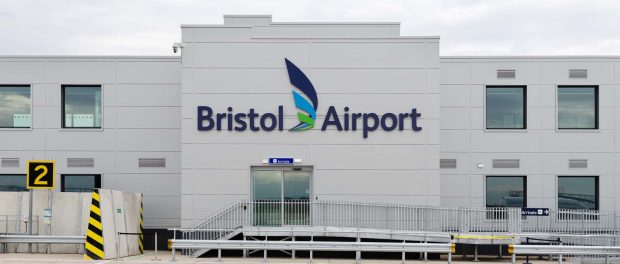
Bristol Airport has taken a major step forward in improving passenger flow and operational efficiency with the completion of a new two-storey modular dispatch building, delivered by Wernick Buildings. Installed directly on the airfield within a live operational environment, the project demonstrates how modular construction offers airports a faster, safer, and more sustainable way to increase capacity without disrupting day-to-day operations.
As UK airports continue to face rising passenger numbers and increasing pressure to future-proof their estates, this project offers a clear example of how modular techniques can be deployed quickly and effectively to extend airside infrastructure.
A rapid solution to growing capacity demands
With passenger numbers increasing at Bristol Airport, the requirement for expanded boarding capacity became urgent. The airport needed a new dispatch building that could serve multiple flights simultaneously, including high-capacity A321 aircraft carrying around 230 passengers each. While maintaining strict safety, security, and operational standards.
Traditional construction methods would have required extended site works, heavy vehicle movements, and significant disruption to airfield operations. Instead, Wernick delivered a modular solution that ensured installation was completed safely and efficiently, with minimal interruption to airport activities.
The resulting facility includes:
- A two-storey modular building with offices, staff spaces, and dispatch rooms
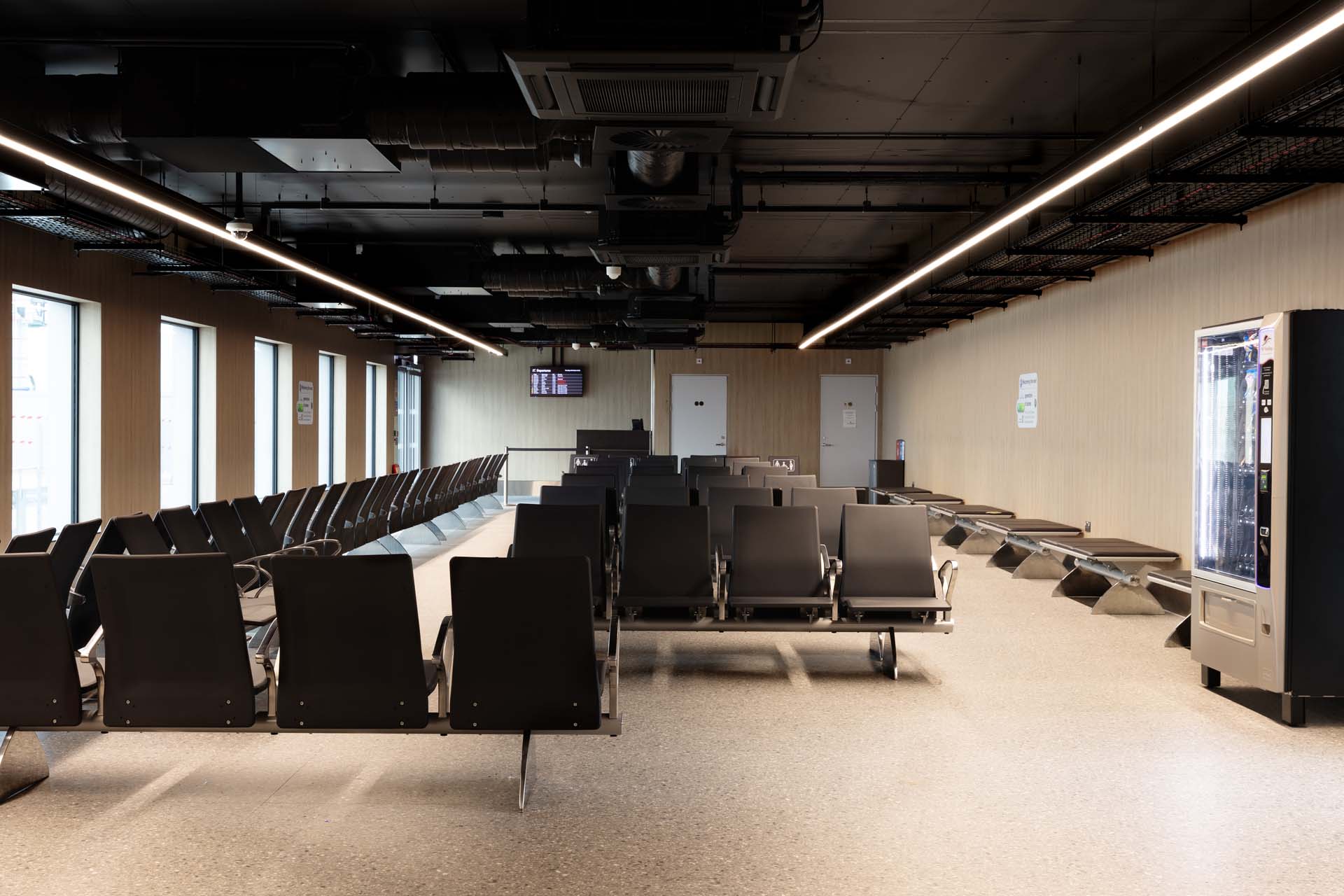
- Three boarding gates designed to process high passenger volumes
- A durable, low-maintenance external finish suitable for exposed airfield environments
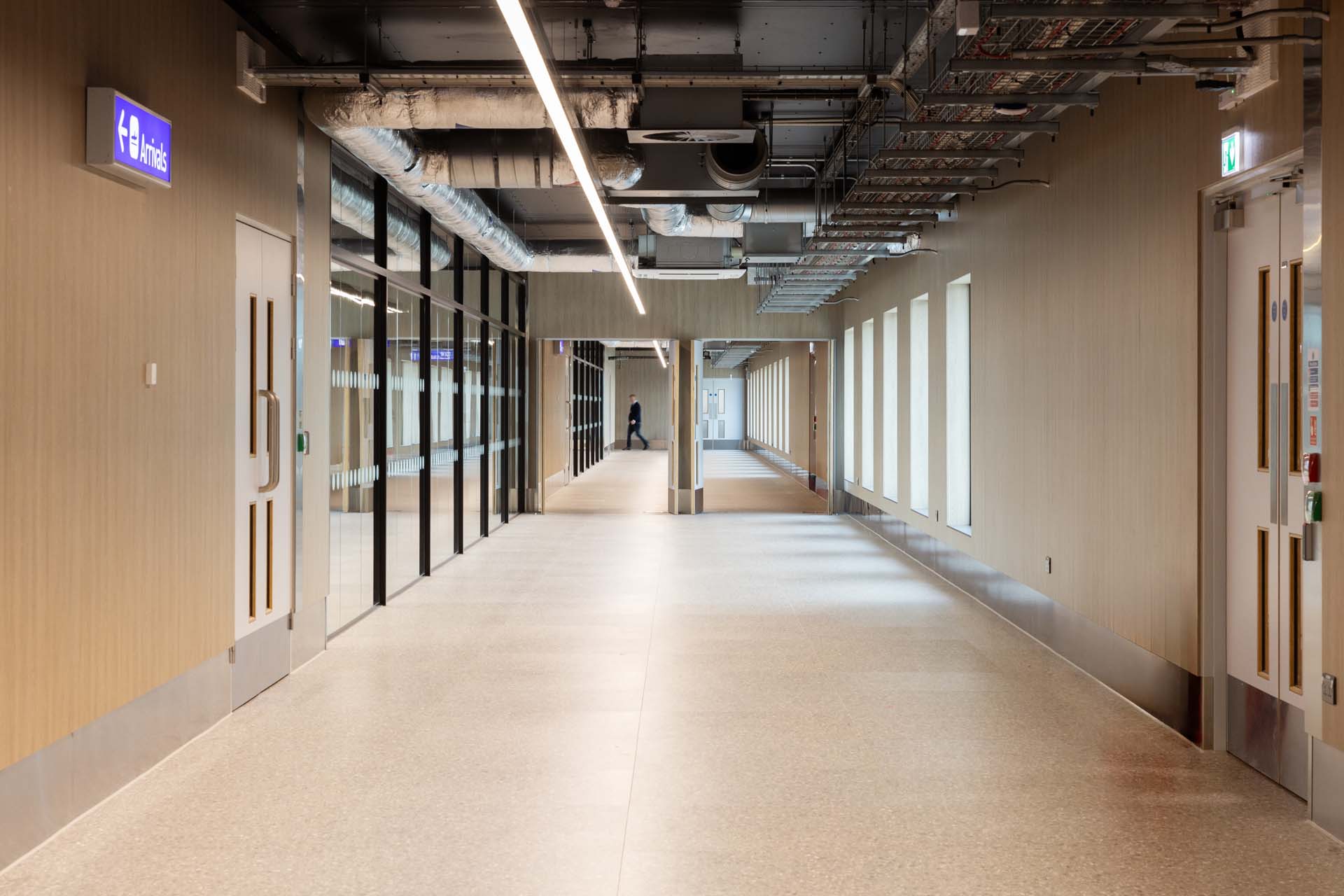
- Internal layouts designed to streamline boarding operations and support staff efficiency
Through offsite manufacture, the project significantly reduced the time required on the airfield, allowing the building to be brought into service far sooner than a traditional build.
Delivering safely on an active airfield with precision, and coordination
Working airside demands meticulous planning, controlled movements, and strict adherence to airport security procedures. Every activity must be carefully coordinated to avoid any impact on aircraft operations, ground handling, or passenger movements.
Wernick’s offsite approach ensured that the majority of construction work took place in a controlled factory environment, eliminating many of the challenges typically associated with airfield builds. Only essential installation activities took place on-site, drastically reducing vehicle traffic within the airfield, noise and dust, contractor numbers operating in restricted zones and the risk of disruption to aircraft stands and taxiways.
This was particularly valuable at the Airport, where the site is compact and aircraft stand space is at a premium.
The precision of modular manufacture meant that modules arrived ready for assembly, with services, structural components, and internal systems already completed to a high standard. This reduced installation time and helped ensure consistent quality across all building components.
Sustainability and efficiency built into every stage
The aviation sector continues to prioritise sustainability across operations and infrastructure. Wernick’s modular system contributes to these goals by significantly reducing waste, carbon emissions, and on-site environmental impact.
Key sustainability benefits include reduced embodied carbon through optimised material usage and reduced wastage in factory production. Lower transport emissions thanks to fewer deliveries compared to traditional construction. Minimised site disturbance, preserving airfield integrity and reducing energy use related to on-site works and future adaptability, helping airports avoid the environmental cost of demolition and rebuild
The building’s energy-efficient specification included enhanced insulation and controlled ventilation further supporting operational sustainability throughout its lifecycle.
Designed for flexibility and future growth
One of the major advantages of modular construction for airports is its inherent flexibility. As passenger demand fluctuates and aircraft fleets evolve, airports require buildings that can adapt quickly.
The Bristol Airport dispatch building has been designed with long-term adaptability in mind. Modules can be extended, reconfigured, or relocated if operational needs change providing a far more agile solution compared to fixed traditional structures.
This scalability supports airport master-planning and allows estates teams to manage infrastructure growth more sustainably over time.
A blueprint for future airport expansion
The success of this project demonstrates the significant value modular construction can bring to airports and active airfields across the UK. From delivering additional gate capacity to creating temporary or permanent operational hubs, modular construction offers airports the speed, safety, and environmental benefits needed to respond rapidly to industry pressures.
For airports, key advantages include:
- Reduced operational disruption during installation
- Safer construction environments with fewer airside activities
- Accelerated timelines, allowing infrastructure to come online quickly
- High-performance, durable buildings suitable for demanding airfield conditions
- Cost-effective expansion through repeatable and scalable modular systems
Wernick’s work at Bristol Airport provides a proven model for other airports seeking efficient, sustainable ways to enhance their estates.
“Modular was the obvious choice for us. Working in the middle of a live airfield meant we had to minimise disruption for our airlines and passengers, while still delivering new gates at speed. Wernick worked closely with us from the outset, and the modules arrived exactly when we needed them — which was invaluable given our tight programme ahead of the summer peak. The finished facility has exceeded our expectations, providing step-free access, greater capacity and a high-quality environment for our customers. For any airport operating in a live and constrained environment, modular should be a serious consideration.”
— Andrew Goodenough, Infrastructure Director, Bristol Airport