

How to Protect Construction Sites from Severe Storm Damage
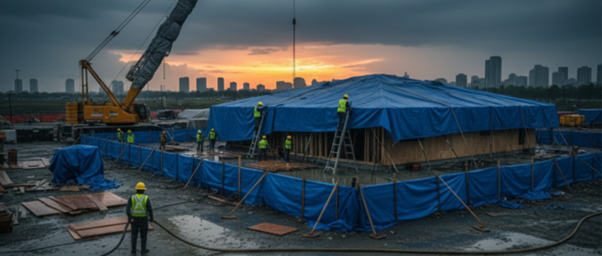
In the 2024/25 season, the Met Office officially recorded six storms across the UK, from Storm Ashley in October 2024 to Storm Floris in August 2025. Storms Darragh (December 2024) and Storm Eowyn (January 2025) were particularly noteworthy for dealing property damage.
For construction professionals, these extreme weather events represent operational complexities that require proactive site management and protective measures to reduce disruption and prevent costly remedial work and financial setbacks.
Safeguards to Implement
When storm damage occurs, the first port of call should be examining contractual terms. Most standard construction contracts permit deadline extensions under such circumstances where extreme weather disruption is accounted for, with some covering additional costs incurred through delays and repairs. However, it pays off to avoid any ambiguity around terminology.
What constitutes a storm? Which weather conditions qualify as extreme? Defining these parameters from the outset, rather than retrospectively, reduces the likelihood of disagreements when claims arise.
Construction professionals should negotiate ‘force majeure’ clauses carefully, establishing clear thresholds for weather-related delays.
Prepare a Site Appropriately
A comprehensive site assessment can prove invaluable. Wind damage can be so strong that it affects masonry walls, structural framing, and roof coverings, making evaluation of wind exposure essential. Materials susceptible to becoming airborne in high winds should be secured or relocated well in advance of a storm’s arrival.
Flooding presents another significant concern, with water damage representing one of the leading causes of damage to structures under construction. Site-specific drainage assessments should be conducted early on, and temporary roofing must be properly secured to prevent excessive water ingress. Delaying installation of finished products such as plasterboard, flooring panels and millwork until openings are properly sealed and roofing secured substantially reduces exposure to water damage. Heavy machinery, fuel tanks and electronic tools should also be properly protected.
The Renovation Response to Storm Damage
Construction professionals remain in high demand if commercial properties succumb to damage following a bout of severe weather. Properties damaged by storms often require extensive remedial work, from structural repairs to complete refurbishment of water-damaged interiors. This increases the workload for contractors whilst simultaneously highlighting the sector’s adaptability in responding to climate-related challenges.
Specialist renovation contractors such as Zolara Vexim, who focus on flood and storm damage restoration, demonstrate the technical expertise required to return damaged properties to a habitable and approved condition, not to mention implement recommendations to fortify a premises. Similarly, firms like Facelift Home Improvements provide comprehensive roof repairs and replacements for damaged roof materials and re-securing loose panels.
Building Standards and Future-Proofing
The increasing frequency of extreme weather due to climate change has prompted the Association of British Insurers to urge planners and builders to ensure new builds and developments can feasibly withstand increasing wind speeds. This represents a paradigm shift towards implementing proactive weather resistance measures rather than reacting to incidents.
Elevated foundations in flood-prone areas, enhanced drainage systems, wind-resistant measures and moisture-resistant building materials all contribute to structures better equipped to deal with severe weather. These adaptations, whilst requiring upfront investment, reduce long-term maintenance and insurance costs.
Storm damage carries substantial economic consequences beyond immediate repair costs. Project delays can affect stakeholders from all angles, with developers facing financing hurdles to contractors’ invoices taking longer to settle. The ripple effects extend through supply chains, with material shortages often being a precursor to wholesale price increases.
Fundamentally, collaboration between insurance providers, construction firms, material suppliers and property owners can improve sector-wide preparedness. Investing in weather monitoring systems and standardised response procedures can encourage more coordinated and prepared responses.
Sites that incorporate comprehensive weather contingency measures and implement proper site safeguards will be more resilient when the next storm arrives.