
How construction suppliers can get real leads from a trade show stand
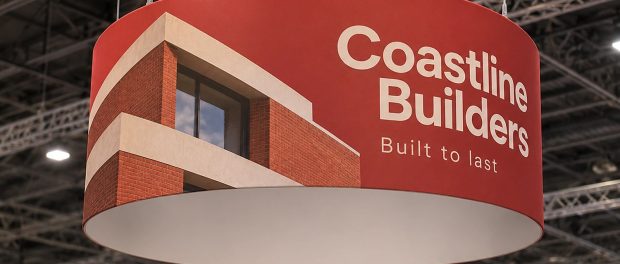 A hanging banner marks the stand out from the far end of the aisle. Image: Stand Central
Manufacturers and suppliers put serious money into a stand at UK Construction Week, London Build and the regional shows, then judge it on a pile of scanned badges. Tom Watts, Director of Stand Central, explains where the leads are won and lost, from the plot you book to the week after the show.
Decide what a lead is before you book
Most suppliers come back from a show with a list of names and no idea which ones are worth a call. A lead is only worth having when you know who the person is, what they are working on and when they want to hear from you again. Agree that with your team before the show, and make sure whatever you use to capture leads on the stand records it.
This matters more at a construction show than at most. The organiser of UK Construction Week Birmingham describes its visitors as contractors, developers, housebuilders, buyers, specifiers and suppliers. A site manager looking for a fixing and a specifier writing next year’s package are both useful, but they need very different follow-ups, and a badge scan on its own won’t tell you which is which.
Position matters more than plot size
The floor plan is the most important page in the exhibitor pack. A plot on a main aisle, near an entrance, a feature area or a seminar stage will usually do more for you than extra square metres at the back of the hall. Corner and peninsula plots are open on more than one side, so people can walk on from two or three directions instead of one.
My advice is to get the best space you can afford without skimping on a quality, eye-catching stand. A great position with a tired stand wastes the position. If the budget is tight, look for savings in which shows you pick and how early you order instead.
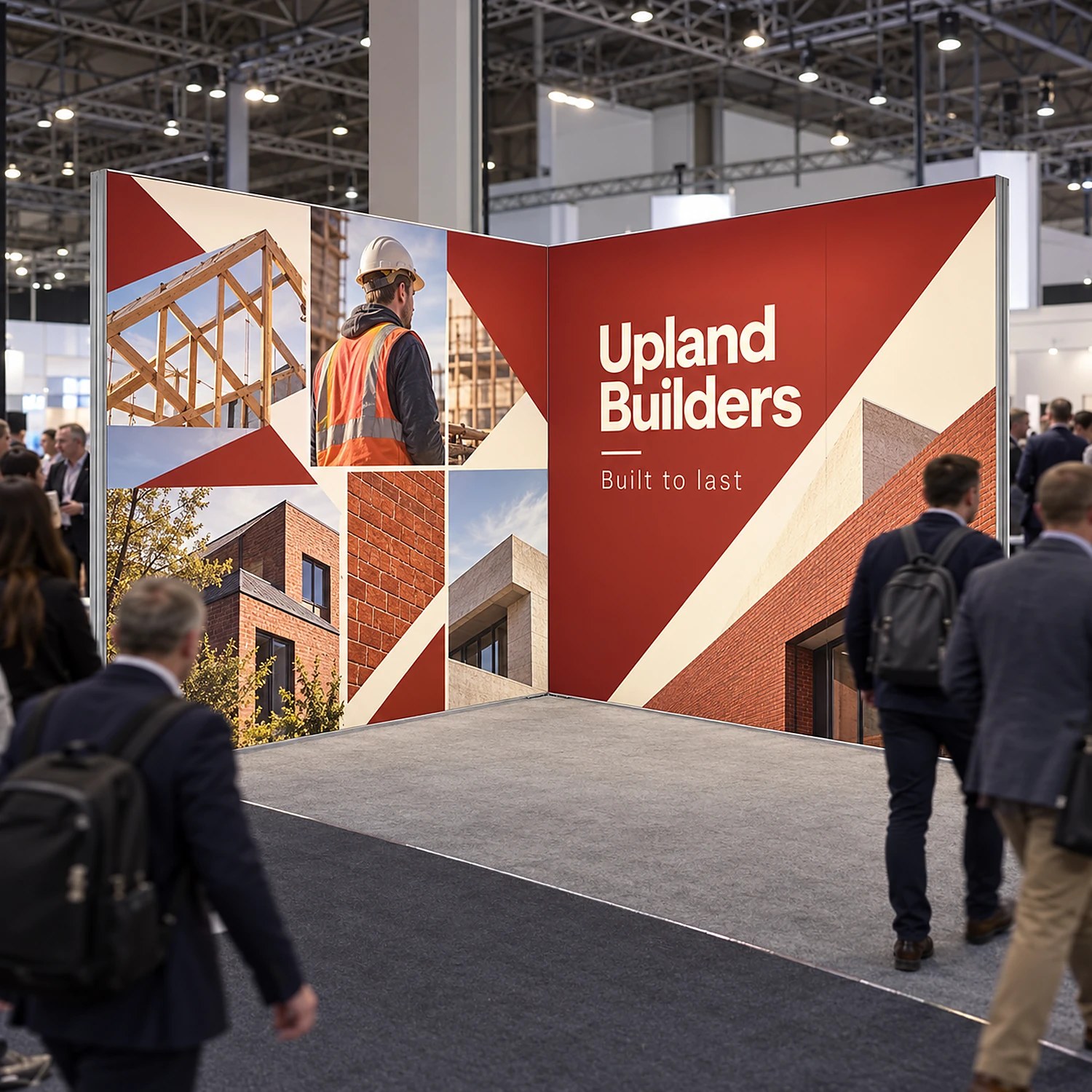
An LED lightbox stand on a corner plot, open on two sides. Image: Stand Central
Timing is where a lot of money leaks out. Across 21 UK exhibitor manuals, shows had a median of four separate deadlines, and the first one fell a median of 38 days before opening. Miss an order deadline and you can usually still order, but the published late surcharges went up to 25%, and onsite orders up to 50%. If you are on a space only plot, stand plans, risk assessments and method statements were due a median 44 days before opening, and one manual said building would not be allowed to begin until the organiser had approved them. Open the manual the week you book.
Make the stand readable from the aisle
Visitors decide from a distance whether to stop. Put one plain line high on the back wall that says what you make and who it is for, such as “Rainscreen cladding systems for high-rise residential”. A tagline that could belong to any company gives them no reason to stop.
Halls like the NEC and Excel London are big, and parts of them are dim, so lighting does a lot of the work. Backlit LED lightbox walls are seen from across the hall. A modular stand kit is a sensible way to get that, because you can choose LED lightbox walls, add a counter, shelving for samples or a screen, and build it without tools.
Use the height and show the product working
Construction products are often hard to judge from a picture, so bring the real thing. A cut-through section, a sample board or a working demonstration gives people something to pick up. Where the product is too big to bring, a short video of an install on site playing on a screen does a similar job.
Height is the other easy win. A hanging banner above the stand marks you out from the far end of the aisle, long before anyone can read your back wall. Check the hall’s rigging rules and maximum stand height in the exhibitor manual before you order one.
Keep the front of the stand open. A counter right across the front acts like a barrier, so put it to one side and leave room for people to step on without feeling they have committed to a sales pitch.
Qualify on the stand and book the next step there
Brief the team on the questions to ask before the doors open. “What are you working on at the moment?” gets a far better answer than “Can I help?”, and it tells you quickly whether the person is a buyer, a specifier or just passing.
When it is a real lead, book the next step while they are in front of you. That could be a site visit, a CPD session for their practice, a sample delivery or a call with your technical team. A promise to “send something over” is easy to forget once both of you are back at work.
Follow up within a week, and plan for the next show
Send what you promised within a week, while the conversation is still fresh. Judge the show on the quotes and site visits it produced, not on the number of badges scanned.
Then think about the stand itself. A reusable stand lets you take the same frames to the next national show and the regional events in between, and reprint only the graphics when a product line or message changes. UK Construction Week Birmingham returns to the NEC from 28 to 30 September 2027, so there is still time to book a good plot.
Tom Watts is Director of Stand Central, which supplies exhibition stands and display graphics to UK exhibitors.