
Beyond just basics
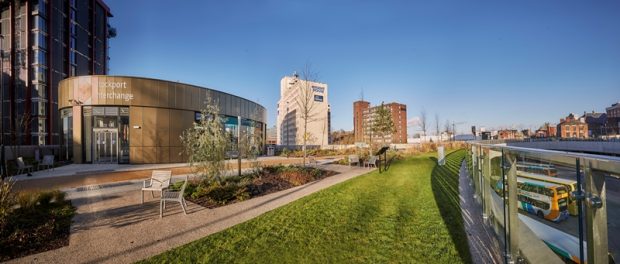 Stockport Interchange
Polypipe Civils & Green Urbanisation explores why Biodiversity Net Gain is a regulatory requirement and how their projects are delivering measurable ecological enhancements.
The UK has long been considered one of the most biodiversity depleted countries in the planet, and this was further confirmed by a 2026 study from the UK Centre for Ecology & Hydrology, which found that over 200 species (including plants, birds and butterflies) are at risk of extinction by 2050 as a result of global warming, the burning of fossil fuels, and environmentally damaging agricultural and urban intensification.
Five years ago, in an effort to tackle the bleak outlook, the government introduced the concept of Biodiversity Net Gain (BNG) – an approach to development that ensures habitats for wildlife are left in a measurably better state than they were prior to the development – in the Environment Act 2021. The mandatory BNG requirements came into force in England in 2024 (February for large sites and April for small sites).
While BNG requirements are primarily placed on developers, achievement of the target relies on a collaborative effort across the entire supply chain. By working closely with developers from the outset, suppliers can play a key role in delivering solutions that not only support compliance but help to maximise biodiversity outcomes across a project.
In the BNG era of construction, transparency is essential. Developers are legally required to deliver and maintain a 10% biodiversity uplift for at least 30 years, meaning traceability for products and materials is imperative.
These legal requirements bring an increased demand for sustainably produced materials – specifically for green urbanisation solutions. That includes sustainable urban drainage systems (SuDS) such as blue-green roofs, rain gardens, tree pits and so on – all engineered systems that deliver real habitat value and bring measurable ecological enhancements, including important BNG metrics like canopy cover, species richness, soil health, moisture retention and pollinator-friendly planting.
While BNG as a mandatory requirement is still relatively new, at Polypipe Civils & Green Urbanisation, we’ve been expertly delivering SuDS and nature-based solutions for decades, and our project portfolio illustrates how engineered green infrastructure can enable biodiversity uplift, even when utilities, space or soil conditions limit traditional landscaping.
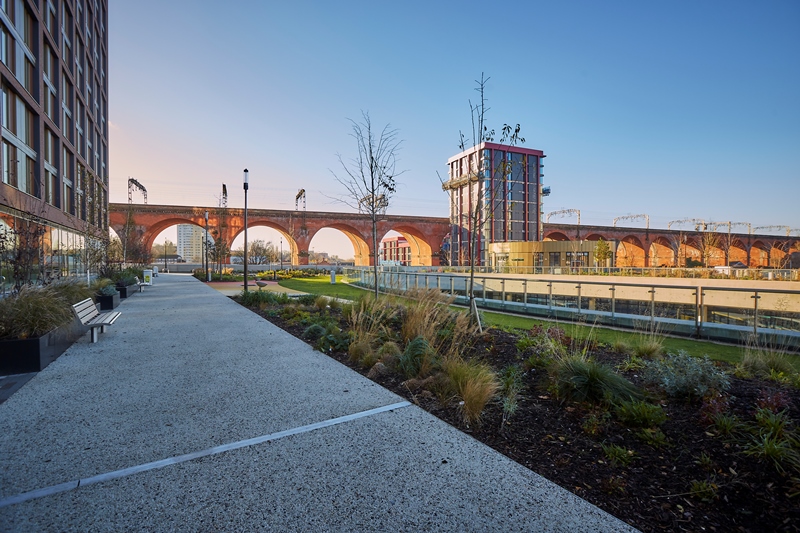
Stockport Interchange
Stockport Interchange – a monumental, £90million regeneration project delivered in partnership with Willmott Dixon, Stockport Council and our colleagues at the Environmental Protection Group (EPG) – is a perfect example.
The result of the recent susdrain award winning project (which was the first of its kind in the UK, and one of the biggest single projects outside of London) was a series of paths, cycleways and an elevated two-acre park named ‘Viaduct Park’.
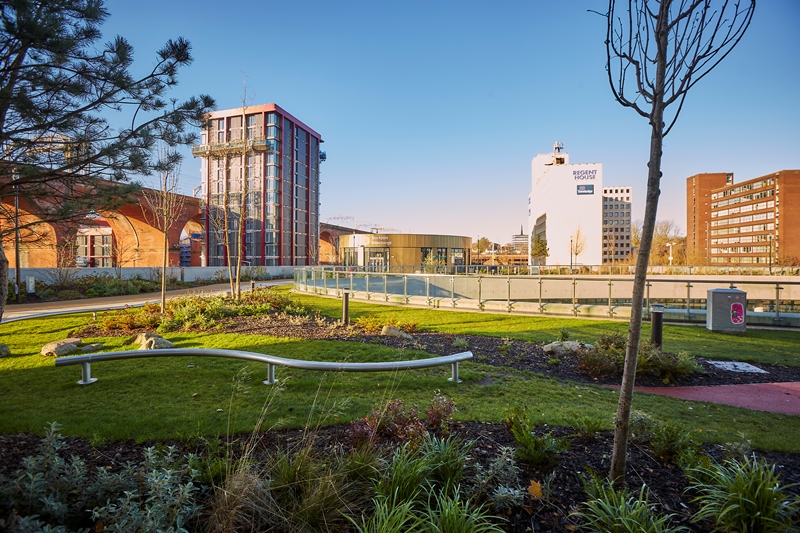
Stockport Interchange
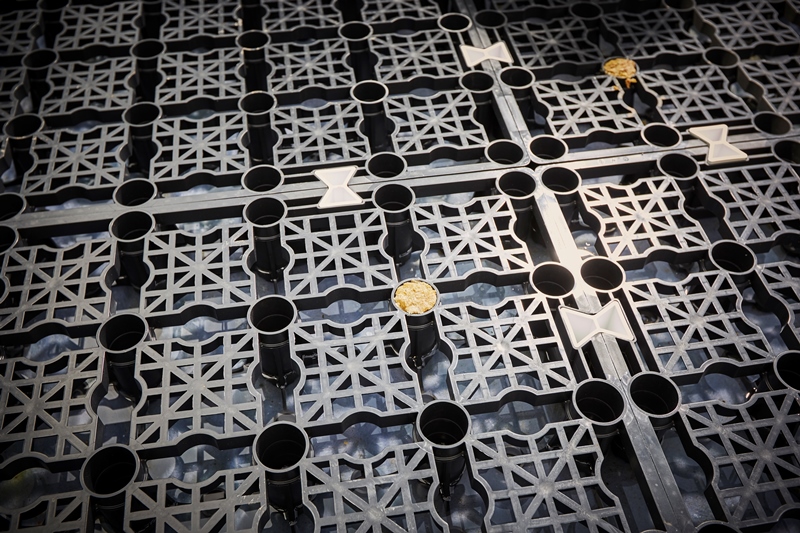
With green features (including a blue-roof attenuation system made from different types of Permavoid, with capillary cones to enable passive irrigation) integrated throughout, sustainability was at the centre of this project from the outset – ultimately not only providing more sustainable travel options for local communities but also providing enhanced green public realm, bringing vibrant and healthy community space that increases and benefits biodiversity, too.
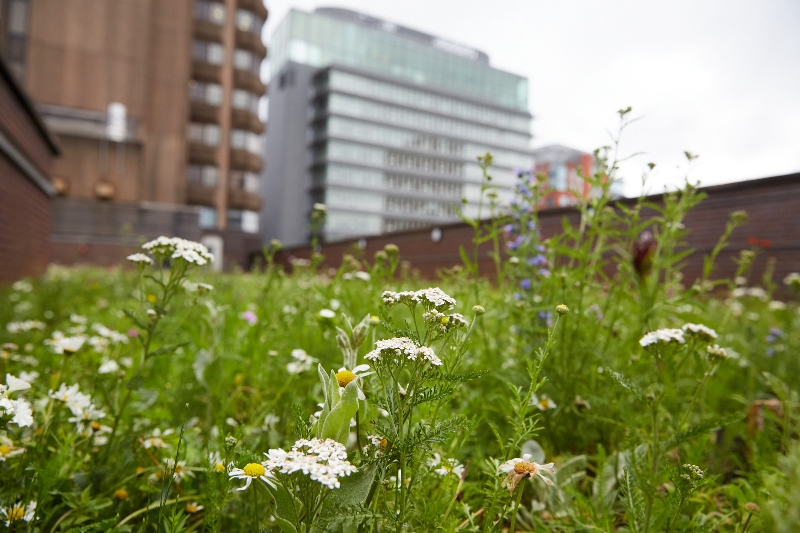
Bloc Roof
Elsewhere, in Manchester, our smart blue-green roof system on Bloc – a city centre workspace – is a good example of how sustainability and biodiversity can be embedded in developments (or redevelopments), creating attractive green spaces in urban areas that wouldn’t traditionally be available.
Unlike conventional green roofs, which typically use a drainage layer to simply remove rainwater, Bloc’s 525 square metre blue-green structure created using our Permavoid solution – a shallow sub-base attenuation system, made from 100% recycled polymer – and retrofitted to the building’s flat roof manages rainfall at the source. The collected surface water is then either retained for re-use or gradually released to help prevent flooding ahead of periods of extreme weather.
Not only has the integration of the blue-green roof approach enabled urban cooling, but it has also enhanced biodiversity by maintaining flora in optimum growing conditions. For Bloc, the planting was specially selected from local varieties to help to attract pollinators and the Manchester Argus butterfly – which became extinct in the area 150 years ago due to habitat destruction. By introducing these integrated natural habitats across the urban landscape, we’re creating healthier, more resilient communities that are highly carbon and energy efficient
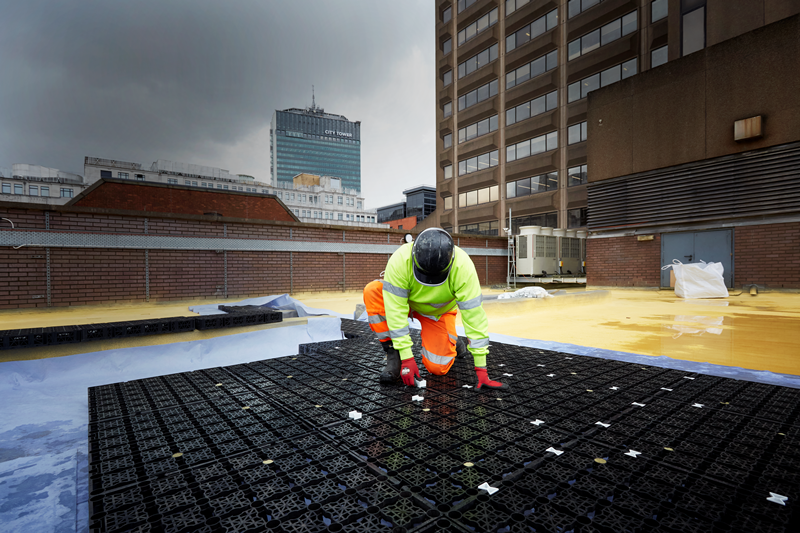
Bloc Roof
These are just two examples of how ecological value can be built into construction but, with a shift in industry-wide thinking, the opportunities are endless – and they span much further than just the visible, tangible benefits.
Utilising sustainable products should be a priority in the quest for compliance, and Environmental Product Declarations (EPDs) play an important role here.
At Polypipe Civils & Green Urbanisation, we’ve invested in producing our suite of independently verified EPDs, which provide a comprehensive assessment of a product’s environmental impact throughout their lifecycle. The existence of such documents provides transparent, data-driven insights that empower us all – at various parts of the supply chain – to make informed decisions that can enable meaningful change and reductions in sector-wide impact.
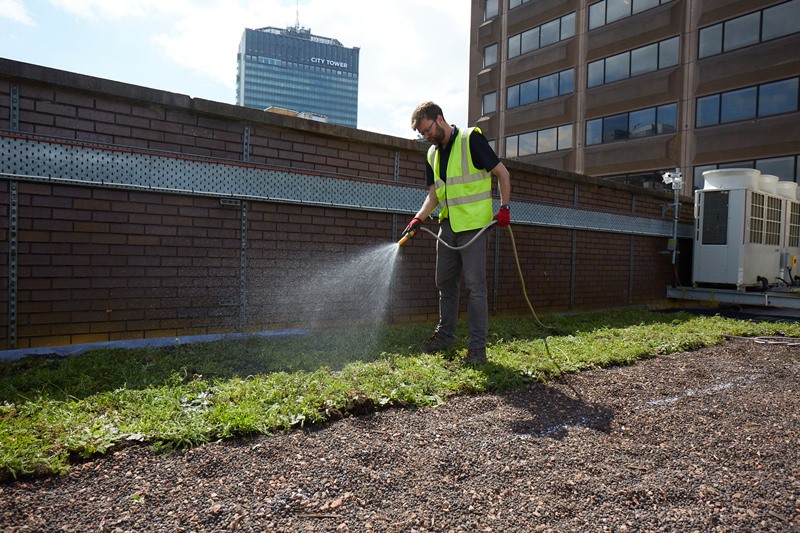
Bloc Roof
Plus, the evident alignment of sustainable material manufacturing to BNG targets means suppliers are better placed during the tender process. If suppliers can prove their value – not just in terms of product performance, but in the long-term wider environmental context – they are more likely to be prioritised during tender.
Five years on from the Environment Act 2021, it’s clearer than ever that BNG cannot be approached as a box tick exercise. With a collaborative approach that spans every element of the project life cycle, we can go beyond just the basics and create truly valuable, sustainable urban environments that benefit us all – environmentally, economically and socially.
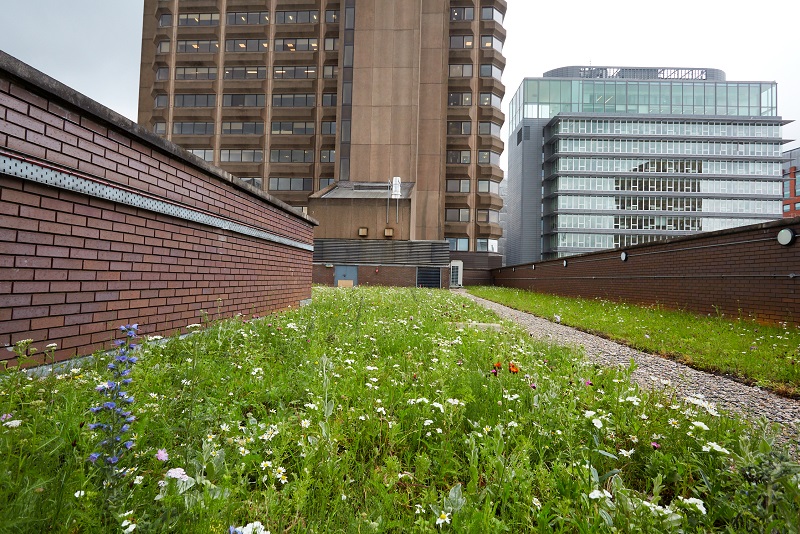
Bloc Roof