

The perils of misidentifying or ignoring knotweed
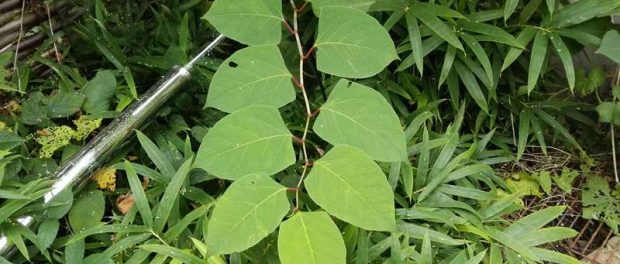
For construction, groundworks and civil engineering projects, the most expensive knotweed outcomes often arise not from the plant itself, but from mistakes at the identification and early due-diligence stage. When it comes to identifying and managing Japanese knotweed – misidentifying or missing it during seasonal dieback can result in contaminated arisings being moved around a site, spreading rhizome fragments into clean areas and multiplying the scope of remediation.
Project risk
Ignoring a suspected stand can also create programme and commercial risk. Once knotweed is discovered mid-project, contractors may need to stop or redesign groundworks, segregate materials, and bring in specialist support, all of which can cause delays and cost escalation.
Common construction-related consequences include:
- Unplanned redesign and delays: Changes to foundations, drainage, retaining structures, or access routes to avoid disturbance and manage risk.
- Costly escalation: The longer the knotweed is left to grow the bigger and costlier the operation will be to remove it – acting early is key to cutting costs.
- Soil and waste liabilities: Excavated material containing knotweed can be difficult to classify, store, transport, and dispose of; poor handling increases the risk of spread and enforcement action.
- Contractual and warranty exposure: Undeclared or unmanaged knotweed can trigger disputes between client, contractor, and neighbouring landowners, and may affect warranties or sign-off requirements.
- Neighbour and third-party claims: Disturbance and movement of contaminated soil can exacerbate off-site spread, increasing the likelihood of claims and reputational damage.
How to identify Japanese knotweed during summer
So now you know the risks involved with knotweed, you can see how important it is to correctly identify it,
Here’s our top tips for identifying knotweed right now.
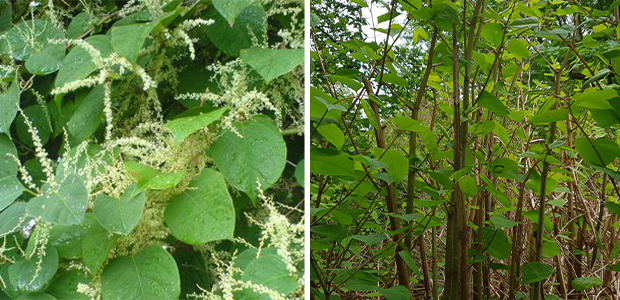
During the summer months, Japanese knotweed becomes fully formed with large shovel shaped green leaves, forming a dense canopy. Leaves can grow up to 200mm long. Japanese knotweed canes grow to around 3 to 3.5m tall. It will often form as a semi-dense stand of upright stems. As summer continues, knotweed begins to form clusters of creamy-white elongated flowers. The canes grow to around 3 to 3.5m tall in summer, often forming a semi-dense stand of upright stems, with lush green foliage.
Key facts:
- Knotweed has large shovel shaped green leaves forming a dense canopy.
- Leaves can grow up to 200mm long during summer.
- Canes grow to 3 to 3.5m tall, forming a semi-dense stand of upright stems.
- Clusters of creamy-white elongated flowers form as summer progresses.
- Identifying knotweed can be challenging due to other flowering plants and weeds.
During the summer months, the volume of other flowering plants and weeds can make it tricky to identify knotweed.
Actions to take
First and foremost – get a survey. There are 3 reasons why this is vital:
- Protect your project: Dealing with Japanese knotweed is complex but manageable with the right strategies. Acting swiftly and consulting with a knotweed expert will protect your project and the environment – and that begins with a property or site survey to correctly identify knotweed.
- Make informed decisions: Commissioning a professional survey will provide documented findings so you can implement a clear invasive species management plan before enabling works begin.
- Save on costs: Early identification and prompt treatment are vital to control its spread, and typically cheaper than leaving it until later in the project.
Our experts are fully trained to identify knotweed and other invasive species such as Giant hogweed, Horsetail and Hemlock.
We can help you avoid any pitfalls of misidentifying knotweed on sites planned for development at pre-planning stage or during contract delivery. Contact the team for more information or to request a quote.
Japanese Knotweed Ltd
Japaneseknotweed.co.uk
0333 2414 413