
Urban Mining and Recycled Construction Products: A Circular Future for Bricks
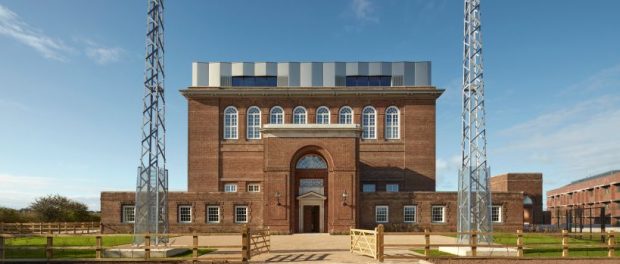 Houlton School – Image: James Brittain
This article shares insights from an episode of our Forming the Future podcast. To hear the full discussion about sustainable construction at scale, you can listen to the full episode.
We often talk about sustainable innovation in terms of what’s new. But what if the future of construction lies in what we already have?
In conversation with Dave Mills, Director of Business Development at Lyons & Anoot, we explored the growing potential of reusing and recycling materials in construction, particularly bricks. For Dave, circularity isn’t a trend. It’s an opportunity to rethink how we build, value and preserve our materials for future generations.
We’ve summarised some of the key takeaways from his podcast episode in this article, including the aesthetic benefits of reusing bricks and the importance of education and transparency.
The beauty of reusing bricks
As a long-time Brick Awards judge, Dave has a front-row seat to the changing face of construction products (and industry priorities.) He’s noticed a shift in the types of projects being celebrated and the materials that bring them to life. ‘It was quite exciting this year to see a number of projects where… the [original] bricks that were on that project were reused,’ shared Dave, though he couldn’t tell us which one just yet.
One example we can share to demonstrate the beauty of this approach—often referred to as ‘urban mining’ or ‘circular brick’—is Houlton School, a retrofit project that used and restored original brickwork.
For Dave, reused bricks are practical and beautiful. Weathering gives them character, and blending old with new creates a sort of architectural storytelling. ‘The use of bricks that have been used and have huge longevity… it allows for old and new to come together,’ says Dave. He believes the fusion of past and present not only adds visual depth but also aligns perfectly with the growing demand for sustainable, resource-efficient construction.
Going beyond green targets
Lyons & Anoot has reused materials from existing buildings on multiple projects. But rather than a branded product, Dave describes it as a process and a mindset. ‘Circular brick is more of an opportunity than a product… [we maximise] the percentage that can be saved, clean those bricks… and offer our clients the opportunity to reuse them.’
This embedded approach extends beyond sustainability targets and offers architects and developers more flexibility and value for their project materials, making circular brick practical at scale. It’s not without its challenges, however. Dave explained that the economics of reclaimed bricks are complex, as resale isn’t always viable. The best value lies in reusing the bricks on the same site or donating it to a different project by the same developer.
Despite the costs, he sees increasing appetite from clients and architects who understand that the environmental benefit outweighs any short-term expense.
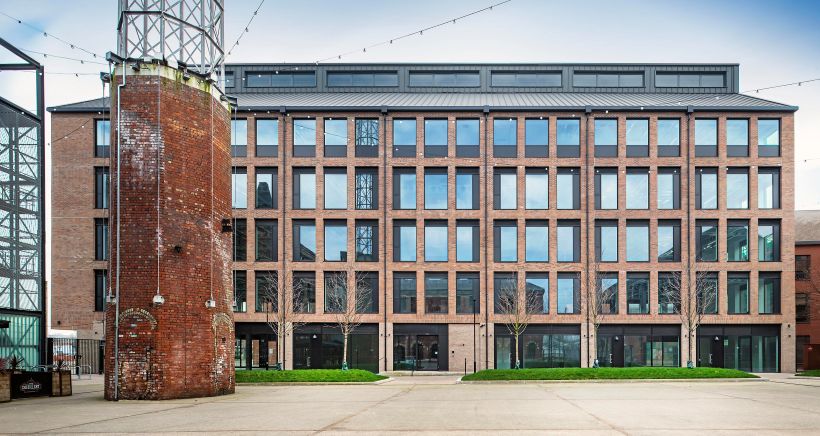
Tileyard North extensively used repurposed materials – Image: Beccy Lane
Education and longevity
Part of the circular construction challenge lies in knowledge gaps, both technical and cultural. Dave notes that while reclaimed materials have long been used in London architecture, the industry has become overly cautious. ‘We have used reclaimed bricks forever… Nobody’s tested those bricks. Now we’re talking about using bricks, people are saying, “What’s the testing that’s being done?”’
He argues that manufacturers and contractors alike need to communicate confidence in the durability of traditional materials. Dave explains, ‘Our bricks for X number of years have been made this way. We’re confident, whether they’ve been on a building or not, that they will last for X number of years without any issues.’ In other words, sustainability doesn’t always mean reinventing the wheel. It often means rediscovering the strength of what already works.
Transparency and trust in sustainable materials
Circularity and reuse go hand-in-hand with transparency. For Dave, honesty about carbon savings, testing and product performance is essential if the industry is to build credibility and avoid greenwashing. ‘If a manufacturer launches a product and they say it’s 50% less [carbon], tell us 50% less than what? If you can’t stand by something and say that’s what we’ve done, then you can’t trust the business,’ says Dave.
‘It’s not a negative for brick manufacturers,’ he emphasises, ‘the more brick is used, [it] develops another market and as brick becomes more sustainable in its production, it makes more and more sense.’ The commitment to openness aims to elevate the industry together instead of increasing competition. By aligning reclaimed material practices with responsible manufacturing, the industry can create genuine progress over short-term marketing wins.
Forming the future
If you’d like to hear the full discussion with Dave, you can listen to the full episode of Forming the Future, the Michelmersh podcast. Looking to the future of your next project? We’re always on hand to offer inspiration and expertise—get in touch with our team today.