

Women in Construction Week “You Don’t Have to Fit a Mould”
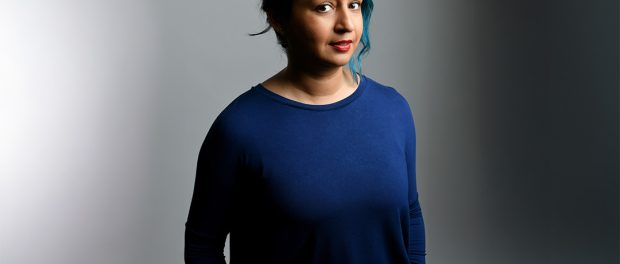
Roma Agrawal on Building a More Inclusive Future in Construction.
Lighthouse Charity speaks with Roma Agrawal MBE, Structural Engineer, Author and Broadcaster
Roma Agrawal has spent her career shaping the built world and cites her career highlight as the six years she spent working on the tallest building in Western Europe – the Shard, designing the foundations and the iconic spire. She was also part of the transformation of Crystal Palace station. She continues to influence the way we talk about engineering itself, so as part of the Lighthouse Charity’s Women in Construction Week campaign, we spent time with Roma, discussing the challenges of overcoming perceptions and stereotypes and encouraging a diverse workforce in construction. Her journey hasn’t been straightforward, and that’s exactly why her story resonates with so many people in our construction community.
I’m a structural engineer,” she begins. “I worked for the first ten years of my career in a design office, designing buildings and bridges.”
Over time, she stepped into roles in design management, business development, procurement, and even a bit of project management. She’s seen construction from every angle. But Roma’s path wasn’t the typical one.
Finding Confidence in an Industry That Wasn’t Built for You
Roma studied physics at university, not engineering, something she felt straight away when she entered the sector. Learning codes, standards and meeting expectations took time. But applying the maths and physics she loved helped her find her groove.
More than the technical learning curve, the environment itself created challenges.
“When I started back in 2005, there were very few women on site. In the office, it wasn’t quite as bad, but it still wasn’t great. I could see I was in a minority, and it affected my confidence,” she says. “I didn’t always feel very empowered to speak in huge meetings where I was the only woman, the only person of colour, the youngest person in the room.”
Her experience reflects what many women still face today, even as the industry makes progress. And that’s why her voice in this campaign matters.
Shifting Pathways and Creating Space
As Roma grew in her career, she began exploring what she truly enjoyed: communicating engineering, but in a human way. She wanted to help clients, architects and the public understand how buildings come to life.
But finding a role that blended technical expertise with communication wasn’t simple. “I found it trickier and trickier to find a role that suited me,” she shares.
Eventually, she made a bold change. For the last six years, Roma has worked full‑time as a writer, speaker and broadcaster, promoting engineering to young people, especially girls and those from diverse backgrounds.
Her goal is simple: help others see themselves in construction.
The Retention Problem No One Can Ignore
When we talk about women in construction, it’s easy to focus on attracting more women into the sector. Roma believes that’s only half of the story.
“Construction is still a male dominated industry for sure. But it is changing. And I think what’s really important is retaining women once they’ve joined,” she says. “So many women I know left their full time jobs in their mid to late 30s, just when they should have been getting their next promotion.”
Why? Because many workplaces weren’t built with diverse needs in mind.
“The ways of working might not suit people with different needs. Flexible working coming in is great, not just for women but for everyone.”
Roma believes we need a cultural shift, not just a recruitment drive. She wants the industry to recognise there’s no one way to be a leader, and no one way to succeed in construction.
Advice for the Next Generation of Women in Construction
To young women thinking about joining the sector, Roma’s message is both hopeful and practical:
“Have a goal. There are lots of firms trying to accommodate people from different backgrounds; find one of them. If you’re struggling where you are, look for support from others, even at different companies and seek advice from mentors and stay on the path.”
She reminds us that construction isn’t just hard hats and building sites. There’s creativity. There’s communication. There’s teamwork.
“You can’t just sit there talking in jargon,” she laughs. “You need to explain your ideas to people who aren’t from the same background as you.” Creativity and communication, she says, are just as important as technical skills.
Using Engineering to Shape Society
Roma hasn’t stepped away from engineering; she’s expanded it.
She’s now writing her sixth book, exploring how the tools we use affect the society that we live in, both in making progress but also in exacerbating inequality. “How can we make it better for everyone?” is the question running through all her work. This will be out in 2028, the thinking and research, she says, takes time, but it’s worth it.
Why Roma’s Story Matters to Our Community
Roma’s honesty cuts through the noise and her journey shows:
- You don’t need a traditional background to thrive.
- Confidence grows when you see people like you in the room.
- Retention is just as important as recruitment.
- Creativity and communication are core construction skills.
- There is no one ‘right’ way to succeed in this industry.
Her message reflects what construction can, and should, be: a community where everyone feels supported, valued and able to build a future that works for them.