

How to Care for Engineered Wood Flooring in a Kitchen

Engineered wood brings a warmth and character to a kitchen that cold hard tiles simply can’t. But kitchens are brutal rooms. Steam from pots, splashes around the sink, relentless foot traffic, dropped utensils, it all adds up to a level of daily punishment that most floors weren’t built to handle. Knowing how to care for engineered wood flooring in kitchen environments means getting to grips with the specific risks that the room creates, not just recycling generic wood floor advice. Get this right, and your floor can last decades without losing its finish or structural integrity; get it wrong, and you’ll see swelling, dullness, and surface scratches far sooner than you’d expect. What follows covers the conditions that stress your floor, the daily and weekly routines that hold damage off, and the long-term habits that protect your investment through years of cooking, cleaning, and family life.
Why Kitchens Put Engineered Wood Flooring Under Pressure
Kitchens aren’t like any other room in the house, and that’s exactly the headache. The selection of engineered wood flooring from Luxury Flooring and trusted stores includes boards built for residential use, with wear layers and constructions designed to handle real-life conditions. Even the most durable boards still need consistent care to perform well in a kitchen environment. Moisture, temperature swings, grease, and near-constant foot traffic combine into a set of stresses you simply won’t encounter in a living room or bedroom. Steam from cooking rises and settles on every surface. Water pools around the sink and dishwasher. Heavy appliances press into the floor for years at a stretch. Each of these factors, taken alone, isn’t catastrophic; together, though, they speed up wear on any floor, so your care habits need to account for all of them at once.
How Moisture and Heat Affect the Wood Interior
Engineered wood has a genuine advantage over solid wood in kitchens because its multi-layer construction is more dimensionally stable; it expands and contracts far less dramatically when humidity shifts. That said, it isn’t immune to moisture damage. Water sitting on the surface for more than a few minutes can work its way through the finish, especially near board joins, and over time that leads to swelling along the edges, a process called cupping. Heat from a nearby oven or underfloor heating running too hot compounds this by pulling moisture out of the board unevenly. You don’t need to panic every time someone boils pasta. But prompt clean-up of standing water isn’t optional. A sopping-wet mop left on the floor does more cumulative harm than a hundred accidental splashes that get wiped up straight away. Keep kitchen humidity somewhere between 40 and 60 per cent and the boards will stay noticeably more stable across the year.
Foot Traffic, Dropped Items, and Surface Abrasion
The kitchen floor takes more physical punishment than almost anywhere else in a home. People stand at the worktop for long stretches, chairs scrape back from breakfast bars, and heavy objects fall from counter height with alarming regularity. Grit and sand tracked in from outside act like fine-grade sandpaper every time someone crosses the floor without removing shoes; honestly, that’s one of the leading causes of surface scratches people never think to blame. Anti-fatigue mats near the hob and sink help with both comfort and protection. Felt pads under appliance feet stop heavy items grinding into the finish. And placing a proper doormat at every kitchen entrance traps abrasive particles before they ever reach the boards. These aren’t complicated changes. They make a measurable difference to how long your floor holds its finish before it needs any recoating or professional attention.
How to Care for Engineered Wood Flooring in a Kitchen Day to Day
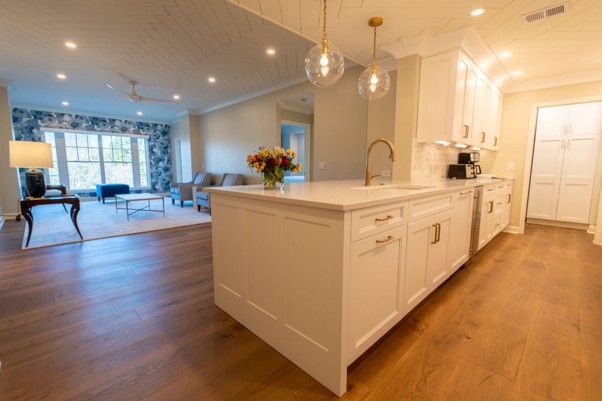
A consistent routine is what separates a floor that ages gracefully from one that looks tired within a few years. The good news is that daily care for engineered wood doesn’t need to eat up your time. The fundamentals are straightforward, and once they’re a habit, they add only minutes to your regular kitchen clean.
Building a Cleaning Routine That Actually Works
Sweep or vacuum the floor every day. That single habit removes the grit and debris responsible for surface scratches, and it does more protective work than any cleaning product you could apply. Use a vacuum on a hard-floor setting so the beater bar doesn’t scratch the finish, or go with a soft-bristle broom. Then, two or three times a week, damp-mop using a well-wrung microfibre mop; the mop head should feel damp to the touch, not wet. Too much water is the most common cleaning mistake people make, and it’s the one that causes the most damage over time. Mop in the direction of the grain to avoid streaking and to stop water being pushed into the joins between boards. So for a quick freshen between proper mops, a dry microfibre cloth handles smears and footprints in seconds. That routine is genuinely all most kitchens need.
Cleaning Products: What Helps and What Damages
Here’s the thing: not every floor cleaner on the market is safe for engineered wood. Steam mops are among the most common mistakes homeowners make; they drive pressurised moisture directly into the board’s surface and joins, so avoid them entirely. Oil soaps and wax-based cleaners are another trap, leaving residue that builds up and dulls the factory finish over time, making the floor harder to clean properly down the line. Bleach, ammonia-based products, and anything acidic will strip the protective lacquer and speed up wear. What you actually want is a pH-neutral, wood-specific cleaner diluted to the manufacturer’s recommended ratio. A few drops in a spray bottle with water is enough per clean. Spray onto the mop head rather than directly on the floor; that way you control exactly how much liquid reaches the surface. The trick is keeping your product choice simple, the fewer things you throw at the floor, the better it holds up.
Conclusion
Caring for engineered wood flooring in a kitchen really does come down to a handful of consistent habits rather than specialist kit or expensive products. Tackle spills straight away, keep grit and debris off the surface, use a barely damp mop, and stick with a pH-neutral cleaner. Protect high-traffic spots with mats and felt pads; keep humidity stable. These steps aren’t time-consuming, but they make a real difference to how well your floor performs year after year. And engineered wood is one of the more practical choices for a kitchen precisely because it holds up well to real-life conditions, as long as you give it the right care.