

How material innovation is reducing risk on construction sites

By Phil Sutton, Founder, Duraproducts
Health and safety have always been important to the construction industry, but the conversation around safety is changing. Projects are becoming more complex with growing pressure to deliver infrastructure faster and more sustainably. Today, protecting workers is no longer about procedures and personal protective equipment, increasingly it is about the materials we choose and the way they influence every stage of construction.

Phil Sutton – Founder Duraproducts
Traditionally, decisions around specification have focused on structural performance, durability and cost. While these remain critical, designers and contractors are recognising that material choice can also have a significant impact on the safety of the people installing, maintaining and eventually replacing infrastructure. The result is a growing appreciation that innovation in materials can reduce risk while simultaneously helping projects achieve their environmental objectives.
Designing around risk
Construction continues to experience some of the UK’s highest rates of work-related musculoskeletal disorders, with around 52% linked to manual handling. Repeated lifting, carrying and positioning of heavy materials place considerable strain on workers. Kerbs, drainage channels and other highways products have traditionally been manufactured from concrete, which creates robust solutions but also introduces practical challenges during installation. Their weight often requires mechanical equipment or multiple operatives for lifting, heightening the potential for injury.
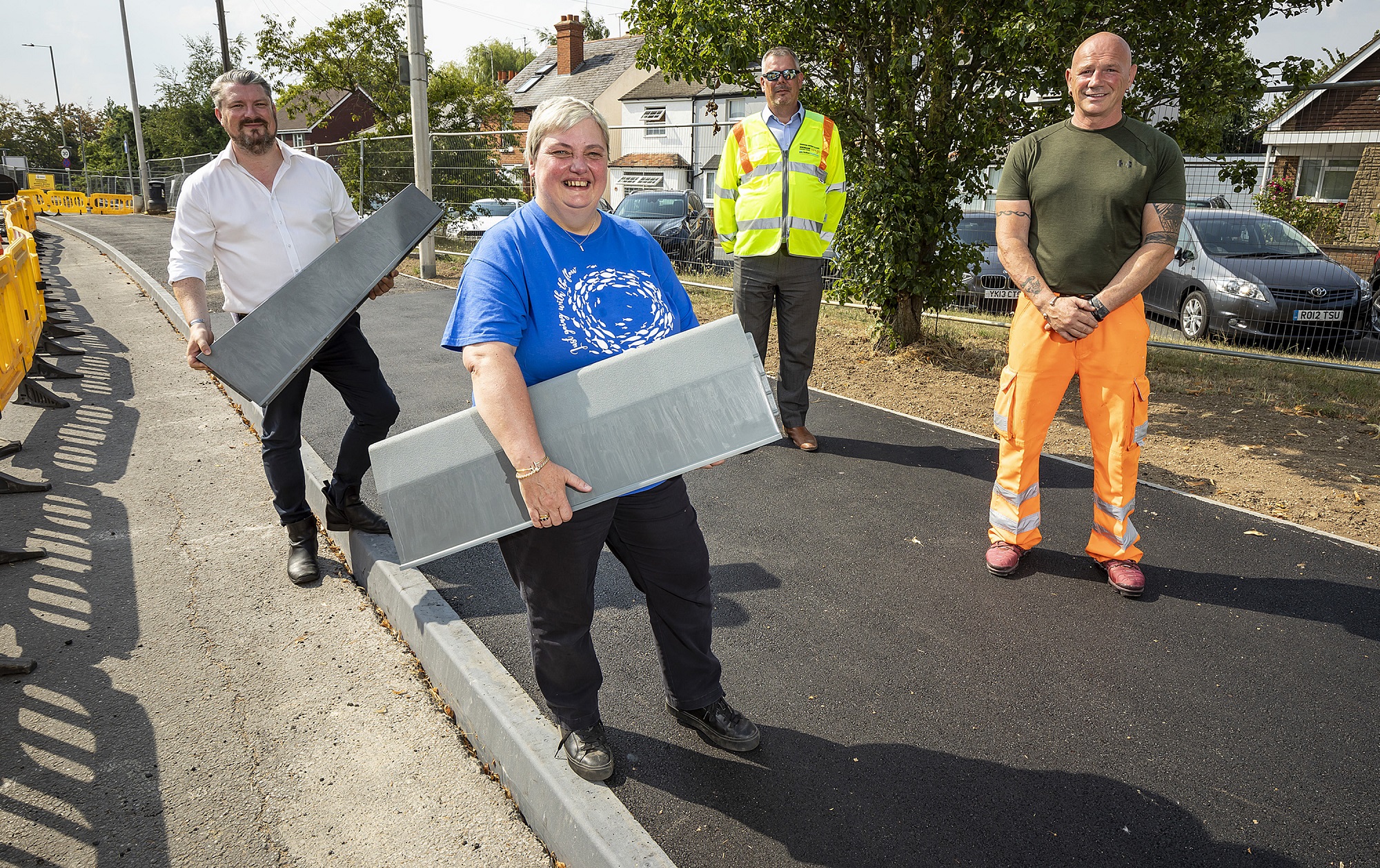
However, designing lighter solutions helps to eliminate this problem. Duraproducts originally developed its recycled polymer systems to address the challenge of plastic waste, transforming discarded plastics into durable civil engineering products. However, one of the most immediate benefits of these materials has been the way they improve working conditions on site. Durakerb, for example, weighs up to 90% less than a traditional concrete kerb. That substantial reduction in weight makes components easier to transport around site, simpler to position accurately and less physically demanding to install. Reduced reliance on heavy lifting equipment can also improve logistics on-site while allowing installation teams to work more efficiently.
For contractors facing mounting pressure to deliver schemes safely and on programme, these practical improvements can have a real impact.
A healthier working environment
Health and safety extend beyond lifting and handling, with more attention also being paid to occupational health risks that develop gradually throughout a construction career.
Exposure to respirable crystalline silica (RCS), generated when cutting, breaking or grinding concrete products, has become an area of focus. Around 600,000 UK workers are estimated to be exposed to RCS every year, with construction accounting for the largest proportion of those at risk. Controlling airborne dust requires careful planning, appropriate equipment and robust site management.
Material innovation can play an important role in mitigating this risk. By reducing the need for extensive cutting and simplifying installation processes, lightweight modular systems have the potential to reduce dust-generation activities associated with traditional concrete products. While dust control measures remain essential, designing products that are easier to install can help create cleaner, safer working environments.
This reflects a broader principle now influencing modern construction: wherever possible, risk should be designed out rather than managed after it has been introduced.
PIC BY STEWART TURKINGTON
www.stphotos.co.uk
Safety and sustainability working together
Perhaps the most significant development is that improvements in health and safety no longer need to come at the expense of environmental performance. Increasingly, the same innovations that reduce risk also deliver measurable sustainability benefits.
Duraproducts manufactures its kerbing and drainage systems using recycled polymers sourced from everyday waste streams, creating long-life infrastructure products while diverting material that might otherwise end up in landfill or lower-value recycling applications. Choosing products with high recycled content immediately supports the circular economy, by creating sustained demand for recycled materials and encouraging further innovation in recycling technologies. It also demonstrates that waste can become a valuable resource rather than an environmental liability.
The environmental benefits continue throughout the product lifecycle as lightweight products require less energy during transportation, reducing fuel consumption both on the journey to site and when materials are moved around construction environments. Installation typically requires fewer plant movements and less mechanical lifting, helping to lower emissions while simplifying site operations. Importantly, the products themselves are fully recyclable at the end of their service life, supporting a genuinely circular approach to infrastructure rather than simply delaying disposal.
Supporting modern infrastructure
Changing transport priorities are also influencing the design of highways and public spaces. Across the UK, local authorities are creating streets that encourage walking, cycling, wheelchair access and public transport while improving resilience to intense rainfall. Combined kerb and drainage systems have become an established solution within highway drainage, providing efficient surface water management while defining carriageways and pedestrian areas.
Duraproducts’ Duradrain and Durachannel systems demonstrate how these functions can be integrated with lightweight recycled materials. Their shallow-profile designs provide engineers with greater flexibility when designing inclusive streetscapes, allowing for reduced kerb upstands that improve accessibility while maintaining effective drainage performance.
The combined kerb and drainage arrangement can also provide clear physical and visual separation between different transport users, supporting safer environments for pedestrians and cyclists alongside efficient management of surface water. This demonstrates how safety, functionality and sustainability are closely linked rather than competing priorities.
Looking beyond compliance
The construction industry has made enormous progress in improving health and safety over recent decades, but the next stage of that journey is likely to be driven as much by design decisions as site procedures.
Manufacturers increasingly have an opportunity and a responsibility to consider the health and safety implications of products throughout their entire lifecycle. That means looking beyond compliance and asking how products affect operatives during manufacture, transportation, installation, maintenance and eventual replacement.
For Duraproducts, this philosophy has informed product development from the beginning. For over 20 years, its systems have been designed to recycle waste plastics into durable infrastructure and also to minimise risk during installation and maximise opportunities for future reuse, recycling or carbon recovery. Reducing environmental impact and improving worker wellbeing should not be viewed as separate objectives because in many cases they are closely linked.
As infrastructure projects face growing expectations around carbon reduction, resource efficiency and workforce welfare, specifying materials that address multiple challenges simultaneously will become even more valuable. The construction industry often talks about building a more sustainable future, but it is equally important to ensure that future projects are built more safely.
Material innovation alone will not eliminate workplace risk and training; planning and good site management will always remain essential. But by selecting products that reduce manual handling, minimise dust-generating activities, simplify installation and support circular resource use, designers and contractors can take another meaningful step towards healthier, safer and more sustainable construction.
Find out more about Duraproducts’ recycled and recyclable civil engineering solutions here: https://www.duraproducts.co.uk/