
Building Circular: How Digital Workflows Made Large-Scale Steel Reuse Possible
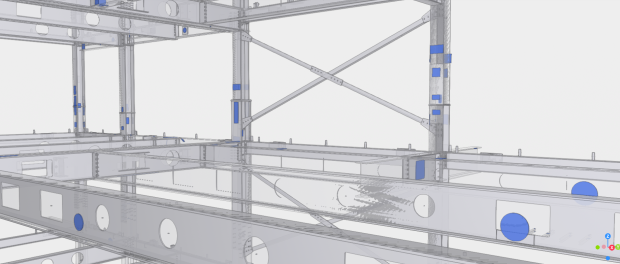
30 Duke Street St James’s, a steel-framed commercial development in London, has set a new benchmark for structural steel reuse, with approximately 77% of its frame fabricated from reclaimed steel sourced from multiple donor sites. Steelwork contractor William Hare used Tekla Structures and a bespoke API to help automate the detailing, nesting, and tracking of reused members, enabling significant embodied carbon savings.
30 Duke Street St James’s in London is a steel-framed commercial scheme with a difference – mainly that approximately 77% of its structural frame is fabricated using reclaimed steel, obtained from numerous different sources. According to Mace Operations Director Sal Capotosto, the reclaimed steel approach achieved an impressive embodied carbon saving of 744t CO2e. This was in addition to the project’s aim of achieving BREEAM ‘Outstanding’ and WELL Platinum accreditations.
William Hare, the leading structural steel engineering group, was appointed as steelwork contractor on the project, responsible for fabricating, supplying and erecting both the new and reclaimed steel as part of the overall package.
Speaking about the project, Jonathan Davis, William Hare’s Preconstruction Technical Director said: “When it comes to reusing steelwork, it can be more labour intensive at the design and detailing stage to ensure that excessive costs are not incurred during the fabrication stages.
“While we’ve worked with reclaimed steel on past projects, it has tended to be smaller quantities. Whereas on 30 Duke Street the vast majority of the structural steel frame was sourced from reused steel, around 470 tonnes. To mitigate the potential for disruption during fabrication, our team had to set up bespoke digital tools and other new workflows to better manage the process. This involved detailing and categorising each individual steel member, including any defects or existing features – such as bolt holes or plates. All defects would then be automatically included in any corresponding assembly drawings provided to the fabrication team, so they knew exactly what they would be working with.”
To support, William Hare developed a bespoke API in Tekla Structures – the constructible BIM modelling software from Trimble – that allowed for a type of advanced nesting, all led by Ivo Garcia, BIM & Innovation Manager. Using the proposed framework design and the reused steel member categorisation, this enabled the team to automatically identify, map and load where the reclaimed steel components would best fit.
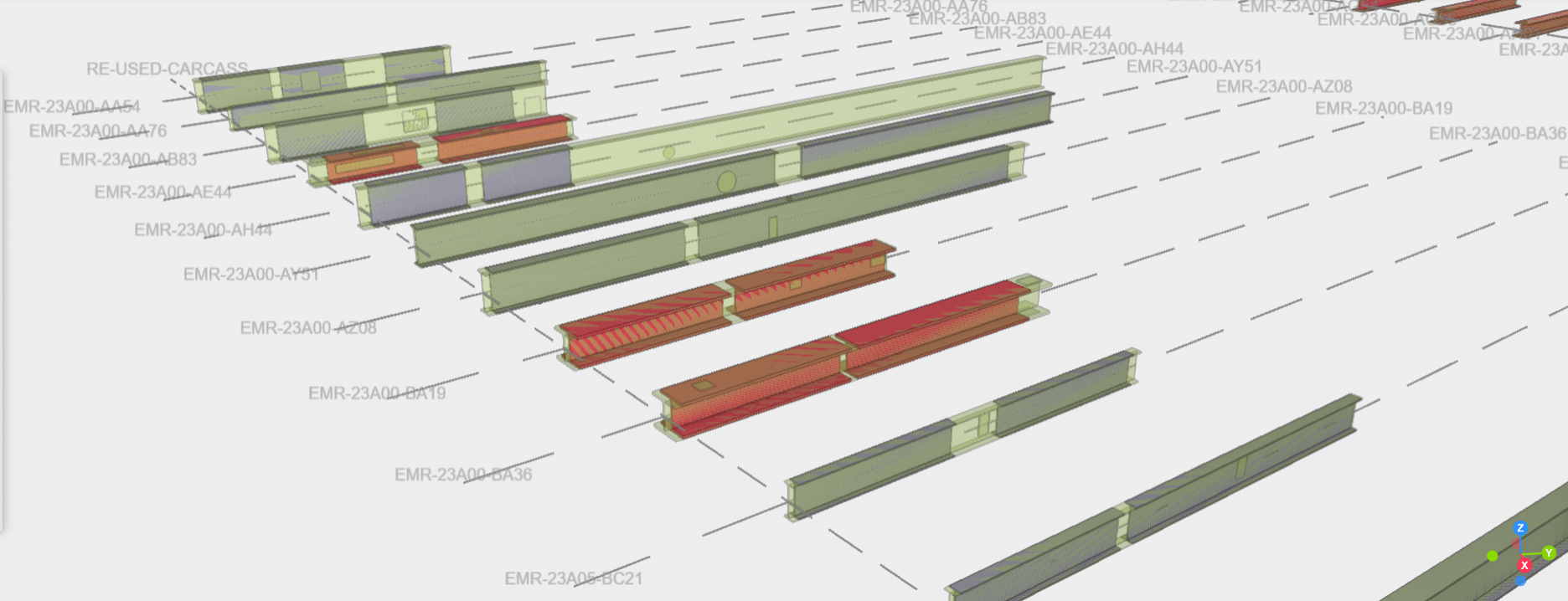
Ivo explained: “By knowing exactly where any existing defects were, we could optimise the detailing process and ensure we were utilising the best piece of steelwork for the parent member. This enabled us to get three or four assemblies out of one piece of reclaimed steel, either avoiding existing features entirely or placing them in a location where it wouldn’t cause any interface issues with the new connection designs.
“The whole process was able to be heavily automated thanks to the Tekla API and our bespoke workflow. We then brought in the detailing team to manually refine and enhance where needed. Without the level of automation, it would have been an incredibly lengthy and time-consuming process.”
In addition, and further adding to the circular economy approach, 30 Duke Street was also one of the first major projects to make use of material passports – a digital record that provides comprehensive information about the reused materials, ensuring technical compliance with the industry quality and design guides, all while facilitating future reuse if required.
“Thanks to the component data being embedded within the Tekla model, including testing dates, steelwork grades and other important information, material passports were made relatively easy, ensuring we could CE mark the reused steel,” commented David Thomas, William Hare’s Project Engineer. “Our working model then became the main source of information for the project moving forward – including for other subcontractors and designers. By having this data along with information on existing fabrication features readily available, others could coordinate around existing features or boltholes, without fear of clashes or problem interfaces.”
Liam Thompson, Project Engineer, added: “As well as facilitating greater quality control, material passports are all about laying the groundwork now for the benefit of future projects, enabling easier disassembly and reuse further down the line. At any point in the future, stakeholders will be able to assess and see exactly where the individual steel members originated from and view their full chemical and mechanical properties. This is in great comparison to today, where a lot of donor projects originate from the 70s or 80s, when the documentation produced wasn’t to a sufficient quality or level of organisation, and so testing of the donor steel is required.”
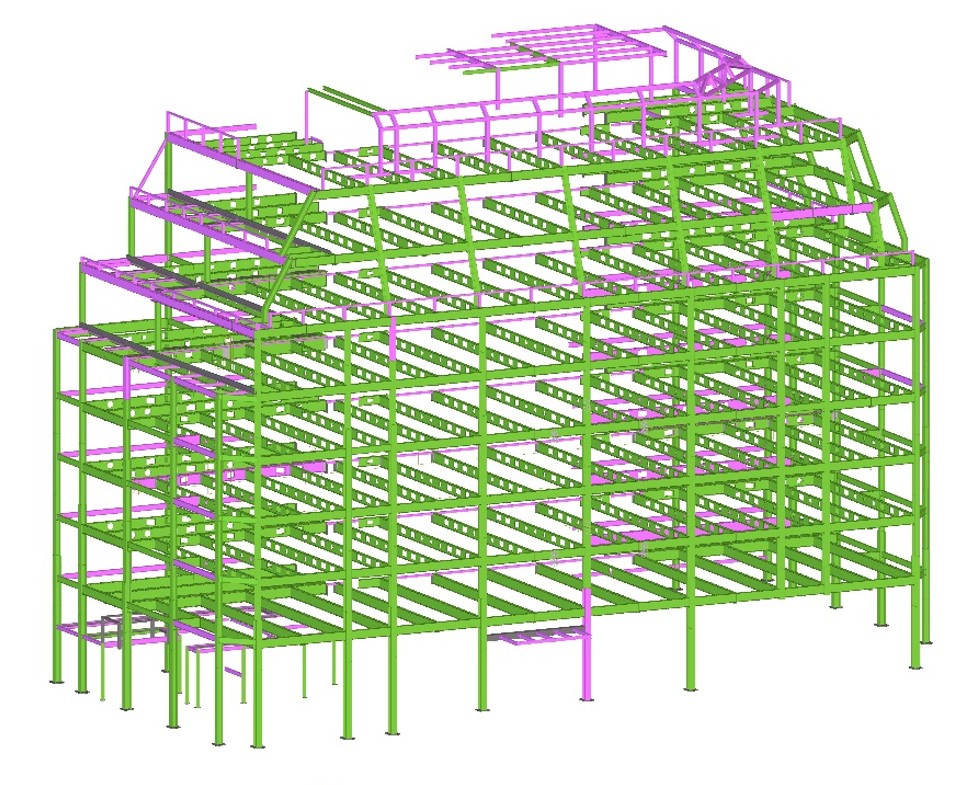
30 Duke Street is the largest steel reuse project for a commercial office in the UK to date, with the largest portion sourced from the demolition of City Place House in London. In addition to material from Cleveland Steel and European Metal Recycling’s (EMR) stock of reclaimed steelwork and a select number of new sections.
Speaking about the changing industry, Jonathan Davis said: “Material reuse is definitely becoming more common – albeit slowly. 30 Duke Street has set a standard and shown that it can be achieved. One of the main challenges to widespread adoption is the perception that reused steel might not be competitive. Working with reclaimed steel can come with an initial steep initial learning curve, but with new workflows and internal systems in place the fears of viability due to cost constraints can be overcome. You really need to maximise automation where possible, otherwise it’s so labour intensive that the additional costs and time involved would not be sustainable. Typical construction programmes simply don’t allow for this additional time.
“Other challenges include the quality of information and data supplied by the steel provider, with the need for some sort of industry regulation or standardisation here. This material data must be of an acceptable quality for the steelwork contractor, as it is this that feeds into our workflows and the wider material passports. As the industry increasingly looks to robotic fabrication, this will only become more critical. Especially as automated assemblies are presently all typically geared towards new, virgin steel, which itself will need to change.”
To learn more about Tekla Structures, Trimble’s BIM software, visit: https://www.trimble.com/en/products/tekla/structures