
UK Hi Vis Regulations for Construction: A Practical Guide to Hi Vis Clothing
The rules on PPE vary between types of site. This article sets out hi vis regulations in the UK for construction sites, covering duties, colours and classes. It explains who must supply hi vis to employees, subcontractors, agency workers and the self-employed. It also covers how CDM 2015 site rules apply, when rail work requires orange and what highways guidance expects. Finally, it explains how to keep hi vis in good condition on site. The rules described apply in Great Britain, as Northern Ireland has separate PPE regulations.
What does the law actually require?
Employers must provide suitable PPE, including hi vis, where other measures cannot fully control a risk. This duty comes from the Personal Protective Equipment at Work Regulations 1992 (PPER), extended to limb (b) workers in April 2022. The regulations do not specify a garment, colour or class. In practice, barriers and segregated walkways come first, with hi vis used where workers could still go unseen. Employers cannot charge employees for hi vis, including replacements. HSE’s PPE at Work guidance sets out the full duties.
Who supplies hi vis on a mixed site?
Each employer supplies hi vis to its own workers, so PPE for construction workers on one site can come from several businesses. The principal contractor sets the site rules but does not take over that duty. In practice, that splits into five groups:
- Direct employees: their employer supplies hi vis free of charge, including replacements.
- Labour-only operatives: if they must do the work personally and are not running their own business, they are likely limb (b) workers. The subcontractor that engaged them should then supply their hi vis. CIS registration does not settle their status either way.
- Agency workers: the staffing business is often the employer, but the hirer can agree to supply hi vis instead. Agree this in writing before the first shift.
- Self-employed contractors: genuinely self-employed contractors supply their own hi vis. They must still meet the site’s colour and class rules.
- Visitors and delivery drivers: spare hi vis at the gate is a simple way to cover people you do not employ.
Site rules: where managers set the standard
The principal contractor sets hi vis clothing rules through the construction phase plan required under CDM 2015. Contractors on site must then follow the parts of that plan relevant to their work. A “hi vis at all times” rule goes further than the law, but it is lawful. It also avoids redrawing hi vis zones as plant routes and exclusion zones move.
The weakness of a blanket rule is that it says nothing about hi vis colour or class. A Class 1 vest meets “hi vis at all times” but may fall short near live traffic. Stating hi vis colour and class in the plan, and covering them at induction, means subcontractors arrive with the right kit.
Hi vis colours: when construction work requires orange instead of yellow
EN ISO 20471 recognises three fluorescent hi vis clothing colours: yellow, orange-red and red. Which colour is required depends on the type of site. On Network Rail infrastructure, orange hi vis is required, as the rail industry standard mandates it. On highways and roadworks, Chapter 8 of the Traffic Signs Manual prefers yellow. On general building sites, there is no legal colour requirement.
On a general building site, the principal contractor can set the colour through site rules. On other sites, the colour is set by sector documents instead and certain conditions become mandatory:
- Railways: Orange hi-vis, certified to RIS-3279-TOM required
- Highways and road works: Yellow or orange-red permitted, however, yellow is advised next to live traffic.
- Working across site types: Separate hi vis stock may be needed, with hi vis colour, class and certification stated in each construction phase plan.
Hi vis classes for construction work: what determines the class
EN ISO 20471 defines three classes, set by the measured area of fluorescent and retroreflective material. Class 3 gives the highest visibility in the standard and Class 1 the lowest. On a general building site, the risk assessment and site rules set the class. In rail and highways work, sector documents can fix a minimum before that assessment starts.
| Work type | What determines the class | Typical requirement |
| General building site | Site risk assessment and site rules | Set by risk assessment or site rules |
| Highways: high-speed roads | Chapter 8 | Class 3; full-length sleeves recommended |
| Highways: other roads | Chapter 8 | Class 2 or 3 |
| Rail infrastructure | RIS-3279-TOM and NR/L2/OHS/021 | Orange, minimum Class 2 |
| Client-led schemes | Contract or scheme specification | As specified by the client |
The risk assessment can always require more than the sector minimum. A banksman directing plant traffic on a building site may need Class 3 without any public roads nearby. Sector documents set a minimum class, not a maximum.
Keeping hi vis clothing compliant on construction sites
Under PPER, each employer must keep its workers’ hi vis clean and in good repair. On a multi-contractor site, this duty stays with each employer, not the principal contractor. However, site rules can allow the principal contractor to refuse entry to anyone in faded or wrong-colour hi vis.
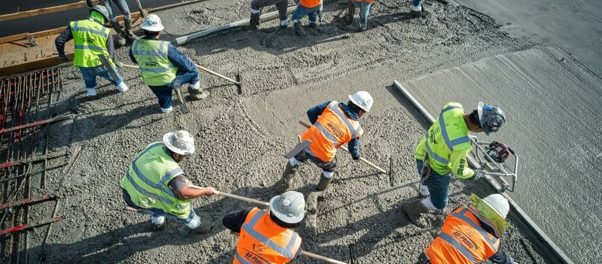
Construction work exposes hi vis to contaminants that can cover its fluorescent and reflective surfaces. Wet cement is highly alkaline and can set into the fabric as it dries. Bitumen and tar from road surfacing work can stain both fabric and tape. Contact with scaffold tubes and fittings can wear down reflective tape over time.
These deposits need removing without damaging the fluorescent fabric or tape. Harsh chemicals such as chlorine bleach can damage fluorescent colours. Professional laundering services for hi vis workwear can use chemistry selected to protect colour and tape. Hi vis can also be washed separately from dark, oily workwear to stop it greying.
Contractors working on rail have a further check to make. A faded rail garment should be replaced with RIS-3279-TOM certified stock, not general orange hi vis. Keeping rail stock separate through laundering and replacement prevents the wrong garment reaching a rail site.