
Delivering Long-Term Sewer Performance
Infrastructure decisions made over 150 years ago are still affecting the nation today.
In the 19th century, the River Thames became contaminated by human waste, contributing to the spread of water-borne diseases. Known as the Great Stink of 1858, this prompted Parliament to invest in a new sewer system. Engineer Sir Joseph Bazalgette designed and built London’s underground sewer network, comprising 1,100 miles of drains feeding into 82 miles of main intercepting sewers to carry London’s waste downstream. Completed in 1875, much of this Victorian infrastructure remains in use today. Bazalgette also recognised that infrastructure needed to accommodate future growth. Rather than designing solely around London’s immediate requirements, additional capacity was built into the system – a decision that helped it accommodate a rapidly expanding population for generations.
Today the challenge remains. Population growth, urbanisation and climate change are increasing pressure on existing sewer networks. This raises an important question: how can decisions today remain fit for purpose in the future? Material selection, installation methods and whole-life performance all have a role to play in delivering infrastructure that meets today’s requirements while continuing to perform for decades to come.
Factors influencing material selection
Material selection does not happen in isolation. Asset owners must balance capital expenditure with operational performance, maintenance requirements and whole-life value, while consulting engineers need to translate these priorities into designs that respond to site conditions, hydraulic requirements, existing infrastructure and future demand. Ultimately, these decisions also affect customers and communities through the reliability of the network and the disruption associated with future maintenance and replacement.
Another key consideration which influences specification and purchasing decisions is the asset’s lifespan, as sewer systems are expected to perform reliably for decades with minimal maintenance or disruption. Independent research conducted by Project Hub 360 indicates that if the operational lifespan of a sewer system exceeds 40 years, vitrified clay pipes represent the most economically viable investment. In the project analysed, the initial investment for vitrified clay was around 4% higher than other common materials, while projected whole-life savings reached up to 65% over the assessment period.
Material specification also needs to reflect the conditions the pipeline will face throughout its service life. This includes external loads from soil and traffic, as well as exposure to aggressive wastewater conditions. Resistance to corrosion and chemicals such as hydrogen sulphide (H₂S) can therefore be important considerations for long-term sewer performance.
Installation considerations
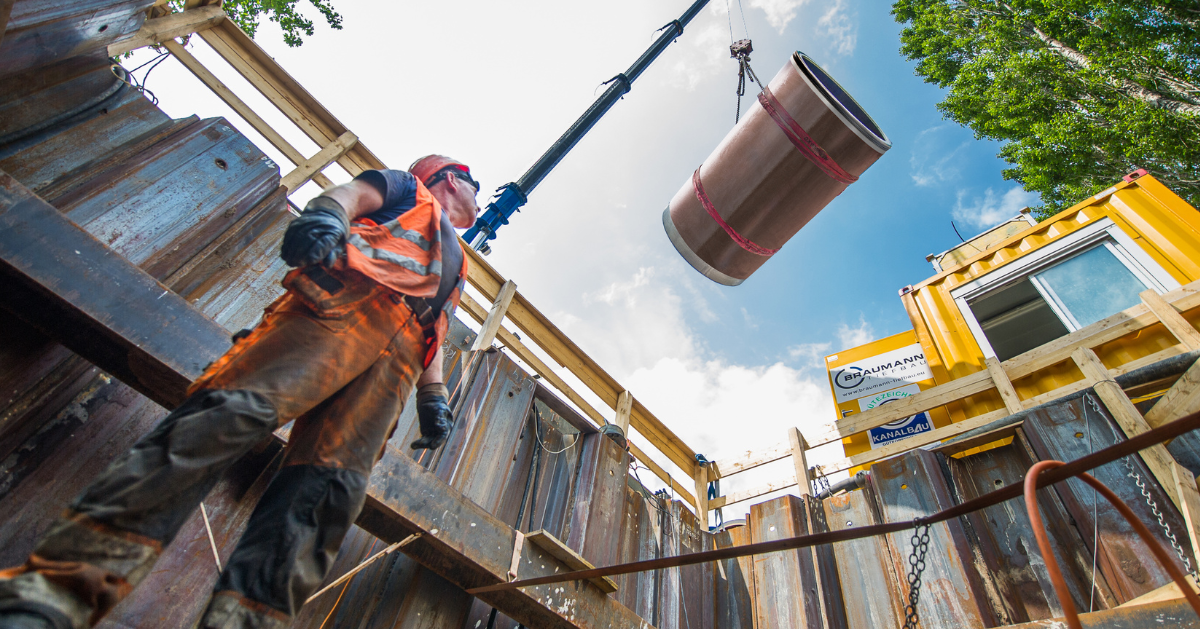
How a sewer is installed can be just as important as material selection. The appropriate method will depend on the ground conditions, site constraints, surrounding infrastructure and requirements of the project.
Open-cut construction remains a practical method for sewer pipeline installation, particularly in areas where there is sufficient space for excavation and surface disruption is manageable. Where access is restricted or pipelines need to pass beneath roads, railways or other sensitive infrastructure, trenchless methods such as guided auger boring, microtunnelling or pipe jacking can reduce the extent of surface excavation required.
For engineers, asset owners and contractors, understanding the relationship between the pipe material, installation method and site conditions is essential to delivering a sewer that performs not only at handover, but throughout its intended service life. This means focusing on how the pipe material will perform under the conditions in which it is installed.
In this context, the ability of a pipe material to provide long-term performance across both open-cut and trenchless applications can be an important consideration.
A look at vitrified clay
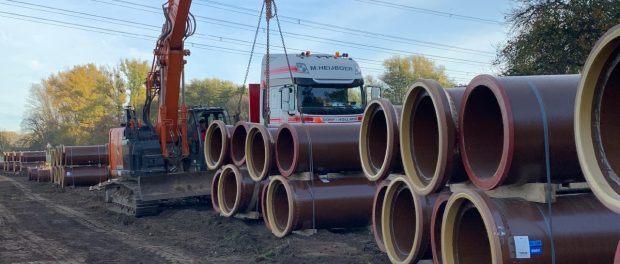
Vitrified clay pipes are fired at high temperatures during the vitrification process, creating a dense ceramic structure that provides high durability, load-bearing capacity and resistance to corrosion. Their high chemical resistance and long-term structural stability help vitrified clay pipes retain their key structural, hydraulic and chemical resistance properties over long service periods. With a service life of 150 years or more, they can help reduce repair and replacement cycles, supporting long-term asset performance and whole-life value.
Vitrified clay pipes can be used for both open-cut and trenchless methods. For conventional open-cut construction, Steinzeug-Keramo provides vitrified clay pipe solutions for new sewer construction, rehabilitation and network extension projects, manufactured in accordance with EN 295. Its KERA.Base (normal strength) and KERA.Pro (extra strength) systems are available in diameters from DN 100 to DN 1000.
For trenchless applications, KERA.Drive vitrified clay jacking pipes are available in the UK in diameters from DN 150 to DN 600, supporting applications including guided auger boring, microtunnelling and pipe jacking. KERA.Drive is distributed through a UK partnership with TS Pipe Supplies.
Built for the future
Bazalgette could not have predicted every demand that would be placed on London’s sewer network over the following 150 years. What his work demonstrates, however, is the value of designing infrastructure with the long term in mind.
Where sewer infrastructure is expected to remain in the ground for decades, material choice should reflect what the asset needs to deliver throughout its service life. The decisions made at the design and procurement stage can influence performance long after installation.
By considering material performance, installation requirements and whole-life value together, engineers, asset owners and contractors can make decisions that respond not only to immediate project requirements, but to the long-term demands placed on a sewer network.For more information on Steinzeug-Keramo, visit: https://www.steinzeug-keramo.com/en-gb/