

Understanding Battery Safety for the Construction Industry
Why battery chemistry, system design and safety standards matter
Recent media coverage has understandably put lithium battery safety under the spotlight.
Stories involving e-bikes, e-scooters and consumer electronics regularly make headlines, often accompanied by dramatic images of fires and references to thermal runaway. The concern is real. The National Fire Chiefs Council (NFCC) has highlighted the growing fire risks associated with lithium-ion batteries, particularly where products are poorly manufactured, damaged, incorrectly charged or inadequately protected.
However, one important distinction is often missing from the discussion:
Not all lithium batteries are the same.
Many of the incidents that attract media attention involve Nickel Manganese Cobalt (NMC) batteries, a chemistry commonly found in consumer electronics, e-bikes and e-scooters. In contrast, many industrial applications now use Lithium Iron Phosphate (LiFePO₄ or LFP) batteries, which are widely recognised for their stability and safety characteristics.
For businesses investing in battery-powered equipment, understanding that difference is critical.
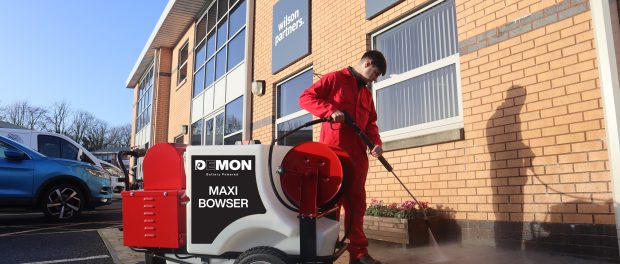
David Walke, Demon’s Director says. “At Demon with over 12 years’ experience developing battery pressure washers the journey has been long. Using Lithium Phosphate as a power source in equipment needs quality management of the system to monitor all aspects of the battery through use, maintenance and charging. Demon have fitted extensive control systems to maximise the use and lifespan of their products, and this gives the customer a product that will last.”
Understanding the Difference
As battery-powered machinery becomes more widely used across construction, facilities management, equipment hire and industrial applications, decision-makers are increasingly asking the right questions.
It’s no longer simply:
“Is it a lithium battery?”
Instead, the focus should be:
“What type of lithium battery is it, and how has the system been engineered?”
The UK’s Office for Product Safety and Standards (OPSS) and the NFCC both emphasise the importance of safety systems, battery management, product testing and protection mechanisms in reducing risk.
Professional equipment manufacturers are increasingly specifying battery systems that combine proven battery chemistries with robust Battery Management Systems (BMS), thermal protection and quality-controlled manufacturing processes.
Safety Is About More Than Battery Chemistry
When thermal incidents occur, the cause is often more complex than the battery chemistry alone.
Industry experts point to factors such as:
- Inadequate charging systems
- Poor installation practices
- Damaged batteries
- Low-quality components
- Product modification
- Lack of thermal monitoring
The NFCC continues to call for higher product standards, improved consumer education and stronger safety controls across battery-powered products.
For professional users, this reinforces the importance of working with reputable manufacturers, established supply chains and properly engineered equipment.
What Should Businesses Look For when purchasing battery-powered equipment?
When assessing battery-powered equipment, businesses should consider:
- Battery chemistry & type
- Battery Management System (BMS) protection
- Cell quality and traceability
- Product testing and certification
- Reputable manufacturers and suppliers
- Safe charging and installation procedures
The National Fire Chiefs Council continues to emphasise the importance of robust safety standards and correctly engineered products.
The Future of Battery-Powered Equipment
There is no question that battery-powered machinery will continue to grow.
Facilities management providers, contractors, hire companies and public sector organisations are all seeking lower-emission, lower-noise alternatives for many applications. At the same time, advances in battery technology are making electric-powered equipment increasingly viable for industrial use.
As adoption grows, so too must understanding and governance.
Battery safety should be taken seriously. But informed decisions require more than headlines.
The conversation should focus on battery chemistry, system design, protection systems and product quality.
Because when it comes to lithium batteries, the details matter.
Comment from David Walke – Director, Demon Pressure Washers
“The headlines around lithium battery fires have understandably created concern, but it’s important to recognise that not all lithium batteries are the same.
In professional equipment, safety comes down to far more than the battery itself. Chemistry, Battery Management Systems, product design, supplier quality and system integration all play a significant role.
As battery-powered machinery becomes more common across construction, facilities management and equipment hire, it’s important that businesses assess the complete system rather than judging all battery technologies by the same standard.
At Demon, we believe informed decision-making starts with understanding the differences. We choose our suppliers based on their reputation, safety record and the quality of their batteries, we then ensure robust BMS are in place during our stringent manufacturing practices.”
For more information on battery-powered cleaning equipment, visit:
www.demon-pressure-washers.co.uk