
Onetrace: Stop reconstructing evidence—start proving work on demand
Six months after the job’s finished, a Tier 1 contractor calls. They want proof a specific area was signed off, dated, and done to spec. You know the work was right. Proving it is another matter.
For most subcontractors, that means going back through text threads, paper sign-off sheets and undated photos, trying to piece together a timeline from memory and whatever scraps survived. The work was done properly. The record just isn’t built to answer the question fast, and a simple query starts to look like a dispute.
Built for subcontractors, not adapted for them
That gap between doing the work and proving it is what Onetrace was built to close. Onetrace is construction management software built specifically for subcontractors, not adapted from a main contractor’s project system or a generic QA tool. It’s used by fire protection, fire stopping, drylining, roofing, façade, M&E, plumbing, electrical and specialist maintenance contractors across the UK, from single-site SMEs to multi-trade enterprises.
The problem it solves is a familiar one: site records that are fragmented across systems and people, reconstructed after the fact instead of captured as work happens. That reconstruction is where admin hours disappear, reporting slows down, and a client’s routine question turns into a costly back-and-forth.
A record that builds itself, on site
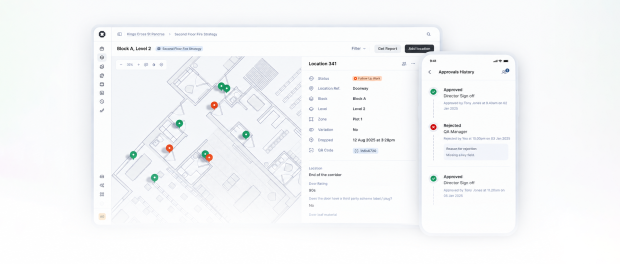
Onetrace works differently. Site teams work directly from the drawings, pinning photos, forms and approvals to the exact location as the job progresses. The result is a timestamped, connected record that builds itself, ready the moment anyone asks for it, rather than something the office has to assemble under pressure. One click turns that record into a branded, client-ready report, no digging through folders or old messages required.
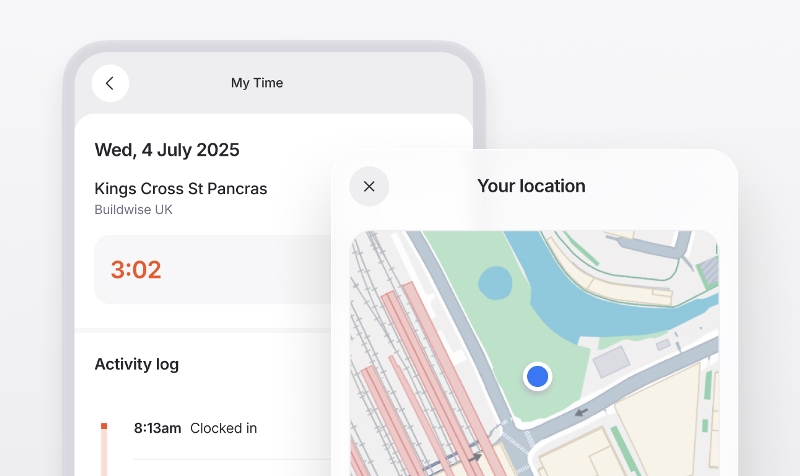
The same pressure shows up on the workforce side. Plans change, operatives move between sites, and every change creates its own admin: updating schedules, chasing timesheets, confirming the right documents are signed before work can even start. Onetrace’s Planner lets contracts managers assign jobs and adjust schedules in seconds, so plans stay live instead of running off an outdated tracker. GPS-verified clock-ins and geofencing remove the guesswork over who was on site and when, automatic clock in and out stops missed entries becoming a payroll dispute, and mandatory documents such as RAMS and toolbox talks get signed as part of the job itself, not chased afterwards. The result is the same principle applied to people as to evidence: a live, accurate record of who did what, where and when, without adding a coordination job on top of the work itself.
Most construction platforms are built for main contractors or adapted from generic job management tools, then retrofitted for subcontractors. Onetrace starts from the opposite direction: it is built around how subcontractors actually work on site, linking evidence to drawings and locations in real time, so the audit-ready record builds itself as the job happens.
Proof in the field
Trail Group, a Swanley-based contractor working across fire protection, construction, electrical, security and maintenance, used Onetrace during a tender and went on to win a multi-million-pound, multi-year London contract. As managing director Jon Crosby put it: “As a growing business, we needed a system that could keep up with us, one that would help us scale efficiently without adding unnecessary overheads.”
That’s the double benefit worth noting. An evidenced, structured record doesn’t only satisfy the compliance obligation when a client or Tier 1 asks. It becomes proof of professionalism in its own right, the kind that helps win the next tender and hold on to bigger clients, built from the same day-to-day record-keeping rather than a separate exercise.
For subcontractors under pressure to look, and be, more credible to larger clients, that’s a meaningful shift: one record, doing two jobs.
Visit onetrace.com to see how subcontractors are turning site records into audit-ready evidence and commercial advantage, without the admin burden of reconstructing it after the fact.