

Why Mid Sussex Is One of the South East’s Busiest Residential Development Zones
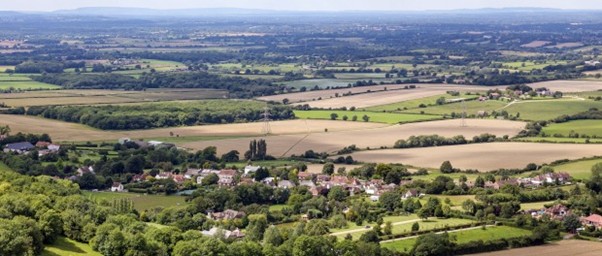
Mid Sussex has quietly become one of the most active residential development zones in the South East, with Burgess Hill sitting at the centre of the activity. For housebuilders and developers scanning the region for viable projects, the district offers a rare combination of strong commuter demand, an established delivery track record, and a planning framework that has actively supported large-scale growth over the past decade. The result is a steady flow of allocations, reserved matters approvals and phased starts that shows little sign of slowing.
Transport and location drive demand
The district’s appeal starts with connectivity. Burgess Hill’s mainline station puts London Victoria and London Bridge within roughly 50 minutes, while Brighton is less than 15 minutes the other way.
The A23 and M23 provide direct road links to Gatwick, the M25 and the wider South East, making the town equally attractive to commuters working across London, the Brighton economy and the Gatwick corridor.
For readers wanting more context on the town itself, Hunters Group has published a fuller profile of Burgess Hill covering its history, amenities and character. It’s that commuter profile, supported by schools, green space and a town centre undergoing steady investment, that keeps absorption rates healthy across a range of price points, from first-time buyer flats through to larger family homes on the town’s outer edges.
Brookleigh sets the scale
The clearest signal of the district’s development weight is Brookleigh, previously known as the Northern Arc. Delivered by Homes England as master developer, the scheme covers around 200 hectares on the northern edge of Burgess Hill and will provide approximately 3,500 new homes, alongside schools, employment land, community facilities and significant green infrastructure.
Homes England has committed to a 23% biodiversity net gain across the site, more than double the statutory requirement, with 30% affordable housing across the wider masterplan. Several national housebuilders are already active on delivery phases, and further parcels continue to come forward for reserved matters and consultation.
For developer partners, it remains one of the largest strategic sites in the South East outside London, and one of the most closely watched case studies in master-planned delivery.
A planning context built for growth
Brookleigh sits within the adopted Mid Sussex District Plan (2014-2031), and the district’s wider planning direction continues to support large-scale delivery. The emerging Mid Sussex District Plan 2021-2039 was submitted for examination in July 2024 and proposes the allocation of three new sustainable communities, each delivering over 1,000 homes together with supporting infrastructure such as schools, healthcare and employment space.
That pipeline sits against a national backdrop of the government’s latest planning reform. For developers, the combination of a live allocation strategy, an active master developer and a council working through a plan review offers unusual visibility over future land supply.
Why the pipeline should hold
The Mid Sussex Growth Deal, agreed with West Sussex County Council and Coast to Capital, targets around 5,000 new homes and 200,000 square metres of commercial space in and around Burgess Hill, supported by infrastructure upgrades including the dualled A2300 and the Northern Arc spine road.
Taken together with ongoing commuter demand, an emerging plan that keeps growth on the agenda to 2039 and a clear policy push for housing delivery nationally, the fundamentals point to a sustained pipeline rather than a short-term spike.
For housebuilders assessing the South East, Mid Sussex remains one of the districts where the numbers, the infrastructure and the planning framework are all moving in the same direction.